The Short Answer: Seasonal allergies require different purifier strategies by season. Spring (tree pollen): high CADR for pollen, any True HEPA unit works. Summer (grass pollen): prioritize outdoor particle infiltration, run purifier 24/7. Fall (ragweed + mold): need carbon for mold VOCs. Winter (indoor dust mites): bedroom purifier is critical since windows stay closed. The Winix 5500-2 and Coway AP-1512HH handle all four seasons well.
Seasonal allergies affect roughly 60 million Americans annually, according to the CDC. While antihistamines treat symptoms, cleaning indoor air addresses a root cause: allergen exposure during the hours you spend at home. Air purifiers are one of the most effective non-pharmaceutical interventions for seasonal allergies, but their effectiveness depends on matching your strategy to the specific pollen season you’re in.
This guide walks you through every major allergy season, tree pollen, grass pollen, ragweed, and winter mold, with specific air purifier settings, filter recommendations, and room-by-room defense tactics. Whether you’re a first-time buyer or a seasoned allergy warrior, you’ll find actionable strategies to reduce allergen exposure throughout the entire year.
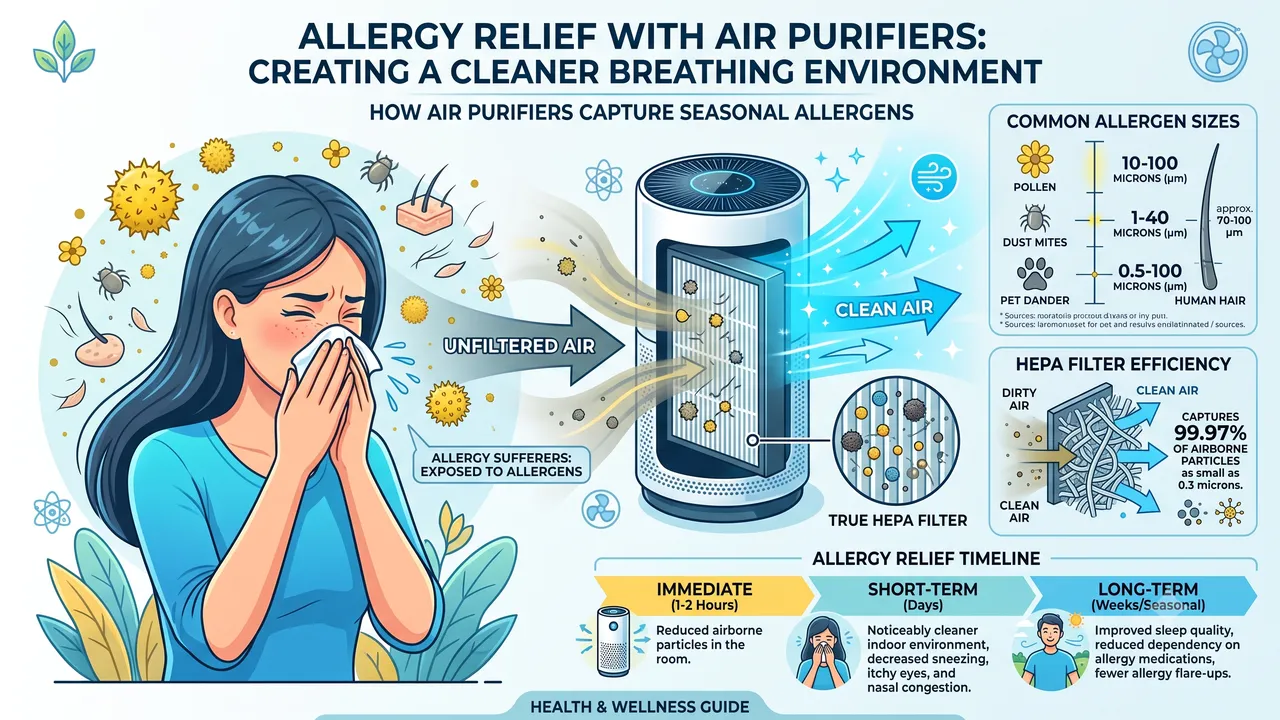
Seasonal Allergy Calendar
Not all months are created equal For allergens. Understanding which triggers are active, and when, is the foundation of a smart purifier strategy. The table below maps the major allergen seasons across the continental United States. Your local timing may shift by two to four weeks depending on climate zone.
| Month | Primary Allergen | Severity (1–5) | Recommended Purifier Settings |
|---|---|---|---|
| January | Indoor mold, dust mites | 2 | Auto mode, low fan speed. Run 24/7. Focus on bedroom. |
| February | Cedar/juniper pollen (South) | 3 | Medium fan during day. Pre-filter wash biweekly. |
| March | Tree pollen (early) | 3–4 | Medium-high during morning hours (5–10 AM). |
| April | Tree pollen (peak) | 4–5 | High during day, medium at night. Pre-filter wash weekly. |
| May | Tree pollen (late), grass (early) | 4 | Medium-high. Transition pre-filter maintenance to weekly. |
| June | Grass pollen (peak) | 4–5 | High fan during afternoon/evening. Shower before bed. |
| July | Grass pollen (late), mold spores | 3–4 | Medium-high. Monitor indoor humidity, keep below 50%. |
| August | Ragweed (early), mold spores | 3 | Medium-high. Start carbon filter check. |
| September | Ragweed (peak) | 5 | Highest practical setting. Carbon filter replacement recommended. |
| October | Ragweed (late), mold (leaf mold) | 3–4 | Medium-high. Pre-filter wash weekly. |
| November | Indoor mold, pet dander (closed windows) | 2–3 | Auto mode. Focus on ventilation and HVAC filter. |
| December | Dust mites, indoor allergens | 2 | Low-medium. Run primarily in bedroom overnight. |
Pro tip: Check Pollen.com or your local weather service for daily pollen counts. On high-count days, bump your purifier up one speed setting from the table above. On low-count days, you can ease back. This responsive approach extends filter life while maintaining protection. For more on tracking air quality at home, see our guide on the best air quality monitors for 2026.
Tree Pollen Season (March–May)
Tree pollen grains are relatively large (20–40 microns), making them easily captured by HEPA filters. The challenge isn’t capture efficiency, it’s volume. On high-count days, a single open window can introduce millions of grains into your home in minutes.
- Purifier settings: Run on medium during peak release hours (5–10 AM). Auto mode on other hours. If your purifier has a pollen-specific mode, enable it during this season.
- Filter maintenance: Wash the pre-filter weekly during peak season. Tree pollen is large and loads pre-filters rapidly, a clogged pre-filter reduces airflow and forces the HEPA filter to work harder, shortening its lifespan. Learn more in our air purifier filter replacement guide.
- Room strategy: Keep windows closed from dawn to mid-morning. Remove shoes at the door, tree pollen tracks in on footwear. Place a washable mat at each entry point.
- HVAC: Set the fan to “on” (not “auto”) with a MERV 11 or higher filter to continuously recirculate and filter indoor air. See our MERV ratings explained guide for filter selection help.
Grass Pollen Season (May–July)
Grass pollen grains are smaller (10–30 microns) and stay airborne longer than tree pollen. They’re more likely to be inhaled deeply and trigger asthma in sensitive individuals.
- Purifier settings: Auto mode during the day; medium at night. Grass pollen counts typically peak in the late afternoon and early evening, so increase fan speed from 2 PM onward.
- Personal hygiene: Shower and change clothes after spending time outdoors. Grass pollen clings to hair and fabric, a 2019 study in Annals of Allergy found that showering before bed reduced overnight allergy symptoms by up to 40%.
- Drying laundry: Avoid line-drying clothes and bedding outdoors during grass pollen season, they collect pollen like a filter. Use a dryer instead.
- Indoor plants: Some indoor plants can harbor mold in their soil, compounding grass pollen symptoms. Check potted plant soil for mold and consider switching to LECA (clay pebbles) for moisture-loving plants.
Ragweed Season (August–October)
Ragweed is the heavyweight champion of seasonal allergens. A single ragweed plant can produce up to 1 billion pollen grains in a season, and the grains are small enough (15–25 microns) to travel hundreds of miles on the wind.
- Purifier settings: Medium-high during peak season. The sheer volume of grains demands higher airflow and more frequent air exchanges. Aim for 4–6 air changes per hour in your bedroom.
- Carbon filter: Ragweed pollen carries volatile organic compounds that carbon adsorbs. Replace the carbon filter at the end of ragweed season, don’t try to stretch it to the full 6–12 months. The VOC load during ragweed season is simply higher than the rest of the year.
- HVAC: Continuous fan with MERV 13 filter. Close fresh-air intake vents if your HVAC has them. For detailed HVAC integration tips, see our whole-house air purification systems guide.
- Cross-reactivity: Ragweed allergy often cross-reacts with certain foods (bananas, melons, cucumber, zucchini). If you notice oral itching from these foods during ragweed season, it’s likely oral allergy syndrome, not a true food allergy.
Winter Mold and Dust Mite Season (November–February)
Many allergy sufferers assume winter brings relief, but indoor allergens spike when windows stay closed and heating systems recirculate air. Mold spores thrive in damp winter conditions, and dust mite populations remain steady in heated homes.
- Purifier settings: Auto or low-medium, running 24/7. The primary targets are mold spores (2–10 microns) and dust mite allergens (1–40 microns), both well within HEPA capture range.
- Humidity control: Keep indoor humidity between 30–50%. Below 30% irritates airways; above 50% promotes mold and dust mite reproduction. A hygrometer costs under $15 and is worth every penny.
- Bedding: Use allergen-proof encasements on mattresses and pillows. Wash all bedding in hot water (130°F / 54°C minimum) every two weeks to kill dust mites.
- HVAC: Replace your furnace filter before heating season starts. A fresh MERV 11–13 filter traps recirculated allergens effectively. Our HVAC filter guide covers selection in detail.
Best Air Purifiers for Allergy Sufferers
Choosing the right purifier makes a measurable difference. The five units below have been selected for strong CADR ratings, true HEPA filtration, and proven performance against pollen, mold, and dust mite allergens. All are widely available and well-reviewed.
| Product | Coverage Area | CADR (Smoke/Pollen/Dust) | Key Allergy Feature | Price |
|---|---|---|---|---|
| Coway AP-1512HH Mighty | 361 sq ft | 233 / 246 / 240 | 4-stage filtration with ionizer (optional). Excellent pollen CADR. | $189 |
| Winix 5500-2 | 360 sq ft | 232 / 243 / 246 | PlasmaWave technology + washable carbon filter. Great for ragweed VOCs. | $159 |
| Levoit Core 400S | 403 sq ft | 260 / 270 / 265 | Smart app with air quality sensor. Auto-adjusts during pollen spikes. | $149 |
| Honeywell HPA300 | 465 sq ft | 300 / 320 / 300 | Highest CADR in its class. Ideal for large living rooms. Turbo mode for peak pollen. | $229 |
| Blueair Blue Pure 211+ | 540 sq ft | 350 / 350 / 350 | Washable pre-filter (fabric). Simple one-button operation. Whisper-quiet on low. | $299 |
For a deeper dive into any of these models, check our complete air purifier buying guide or our budget air purifiers under $100 list. If allergies overlap with asthma, our allergies and asthma purifier guide covers additional considerations.
Room-by-Room Allergy Defense
A single purifier in the living room won’t protect you in the bedroom. Allergens settle on surfaces, cling to fabrics, and recirculate through HVAC ducts. Here’s how to defend each room in your home.
Bedroom (Highest Priority)
You spend 7–9 hours here nightly. This room deserves your best purifier.
- Place the purifier 3–6 feet from your head, at bed height or slightly elevated. Avoid placing it directly behind furniture where airflow is blocked.
- Run it on medium or auto during the day; switch to sleep/low mode at night if noise is a concern. See our air purifier sleep quality guide for noise-level recommendations.
- Use allergen-proof pillow and mattress encasements.
- Remove carpeting if possible, hard floors don’t trap pollen the way carpet fibers do.
- Wash pillowcases twice weekly during peak pollen season.
Living Room
- Position the purifier near the main seating area, away from walls and curtains.
- Vacuum upholstered furniture weekly with a HEPA vacuum during allergy season.
- If you have pets, their dander compounds pollen allergies. Our pet dander air purifier guide covers dual-threat situations.
- Keep windows closed during high-pollen days; use the purifier instead of natural ventilation. Our purifier vs. opening windows article breaks down when each approach makes sense.
Home Office
- Many people overlook the office, but 8+ hours of daily exposure adds up.
- Place a compact purifier on or near your desk. Desktop units work well for small offices under 150 sq ft.
- Dust monitors, keyboards, and shelves weekly, these surfaces collect pollen that re-enters the air when disturbed.
Kitchen
- Cooking generates particulates that can compound allergy symptoms.
- Run the range hood every time you cook. If your range hood vents outside, it also removes airborne pollen that entered through other routes.
- Check under the sink and behind the refrigerator for mold, kitchen mold is a year-round allergen source.
Basement
- Basements are mold-prone due to moisture and poor ventilation.
- Run a dehumidifier alongside the purifier. Keep humidity below 50%.
- Our basement mold and mildew purifier guide covers this topic in depth.
For a complete room-by-room setup walkthrough, see our dedicated room-by-room air purifier guide and purifier placement tips.
Filter Settings for Each Allergy Season
Matching your filter maintenance schedule to the allergen calendar prevents performance drops when you need the purifier most. Here’s a seasonal breakdown.
Spring (March–May), Tree Pollen
- Pre-filter: Wash every 5–7 days. Tree pollen loads pre-filters faster than any other allergen.
- HEPA filter: Check monthly. If the filter appears gray or discolored, replace early. Normal lifespan during spring may drop from 12 months to 8–10 months.
- Carbon filter: Standard replacement schedule (6–12 months). Tree pollen doesn’t carry heavy VOCs.
- Fan setting: Medium during morning peak (5–10 AM), auto the rest of the day.
Summer (June–August), Grass Pollen and Mold
- Pre-filter: Wash weekly. Grass pollen is smaller than tree pollen and can slip past a dirty pre-filter more easily.
- HEPA filter: Monitor monthly. Grass season transitions into mold season, so the HEPA works double duty.
- Carbon filter: Inspect at mid-season. Summer heat increases VOC off-gassing from furniture and flooring, adding to the carbon filter’s workload.
- Fan setting: Medium-high from 2 PM through evening (grass pollen peaks in warm afternoon air). Drop to low overnight with bedroom door closed.
- Humidity: Keep below 50%. Mold spores explode above this threshold.
Fall (September–November), Ragweed and Leaf Mold
- Pre-filter: Wash weekly through October. Ragweed season overlaps with falling leaves, which harbor mold.
- HEPA filter: This is the hardest-working season. Budget for an early replacement if your filter was installed in spring.
- Carbon filter: Replace at the end of ragweed season (typically mid-October in the northern US). The VOC load from ragweed exhausts carbon faster than other seasons.
- Fan setting: Medium-high during ragweed peak; transition to medium as ragweed fades in late October.
Winter (December–February), Indoor Allergens
- Pre-filter: Wash every 2–3 weeks. Indoor allergen loads are lower and more consistent.
- HEPA filter: Standard 12-month replacement cycle. Winter is a good time to install a fresh filter for the upcoming spring season.
- Carbon filter: Standard replacement schedule.
- Fan setting: Auto or low-medium. The purifier is doing baseline maintenance, not fighting an influx.
For a complete filter replacement timeline with cost estimates, see our filter replacement guide and costs and our guide on cleaning and maintaining pre-filters.
The Day-Night Speed Cycling Strategy
Seasonal allergy management with a purifier isn’t a “set and forget” thing. During peak pollen season, spring for tree pollen, summer for grass, fall for ragweed, you need to run the purifier on a higher speed than the rest of the year. The pollen load entering through open windows and on clothing is simply higher, and the purifier needs to work proportionally harder.
The winning strategy: run the purifier on medium-high during the day when pollen enters the house (windows are opened, people come and go, pets go in and out). Drop to sleep mode at night once the bedroom door is closed and you’ve showered (removing pollen from hair and skin, an underrated intervention). This day-night speed cycling maximizes pollen capture during ingress hours while preserving quiet sleep conditions.
Also: check your local pollen forecast daily. On high-pollen days, keep windows closed, run the purifier on high, shower before bed, and wash pillowcases more frequently. On low-pollen days, you can ease up. The purifier does the mechanical work; you control the pollen ingress.
For more strategies on daily purifier use, see how long should you run your air purifier.
Year-Round Allergy Hygiene
These habits complement your air purifier and reduce allergen load across every season:
- Use allergen-proof mattress and pillow encasements (dust mites are perennial allergens).
- Vacuum with a HEPA-filtered vacuum at least twice weekly.
- Keep indoor humidity below 50% to suppress dust mite populations.
- Replace HVAC filters every 90 days during active allergy seasons.
- Shower and change clothes after spending time outdoors during pollen season.
- Remove shoes at the front door to avoid tracking pollen through the house.
- Wash bedding in hot water (130°F / 54°C) every two weeks.
- Consider an air quality monitor to track real-time allergen levels and adjust purifier settings accordingly.
Frequently Asked Questions
Can an air purifier completely eliminate seasonal allergy symptoms?
An air purifier significantly reduces indoor allergen exposure, but it won’t eliminate symptoms entirely. Pollen enters your home on clothing, through door openings, and via HVAC systems. Purifiers are most effective when combined with other strategies: keeping windows closed on high-pollen days, showering before bed, and using allergen-proof bedding. Think of the purifier as one layer in a multi-layer defense system, a very important layer, but not the only one.
What CADR rating do I need for allergy relief?
For allergy sufferers, aim for a CADR of at least 200 for pollen in rooms up to 300 square feet. For larger rooms, scale proportionally, a 400 sq ft room needs a CADR of roughly 250–280. Higher is better during peak pollen season. The AHAM (Association of Home Appliance Manufacturers) recommends a CADR that covers at least two-thirds of your room’s square footage. Our CADR and ACH guide explains the math in detail.
How often should I change the HEPA filter during allergy season?
During peak allergy season (spring and fall), inspect your HEPA filter monthly. A filter that normally lasts 12 months may need replacement at 8–9 months if pollen loads are heavy. Signs of a saturated filter: reduced airflow, visible discoloration, or the purifier running on high more frequently than usual (a sign the air quality sensor is detecting particles the filter should be catching). Off-season, the standard 12-month replacement cycle is fine.
Should I run the air purifier with the windows open or closed?
Closed windows are always better during high-pollen days. An air purifier cannot keep up with the volume of pollen entering through an open window, it’s like trying to empty a swimming pool with a bucket while someone keeps the hose on. On low-pollen days or when outdoor air quality is good, brief ventilation (15–20 minutes) is acceptable, then close windows and let the purifier clean the air. Our detailed comparison of purifiers vs. opening windows covers this in depth.
Do I need a purifier in every room?
Ideally, yes, but that’s not always practical or affordable. Prioritize the bedroom first (you spend the most consecutive hours there), then the living room or home office. A single high-quality purifier in the bedroom can reduce overnight allergy symptoms by 40–60%, according to multiple clinical studies. If budget allows, add a second unit for the room where you spend the second-most time. See our room-by-room guide for a prioritized placement strategy.
See also: Best Air Purifier for Allergies and Asthma, Best Air Purifier for Dust Removal, Air Purifier Filter Replacement Guide and Costs, Air Purifier Placement Guide, HEPA Filter Deep Dive.
Disclosure: This article contains affiliate links. As an Amazon Associate, we earn from qualifying purchases at no additional cost to you. We only recommend products we have genuinely evaluated and believe will benefit our readers. All prices are approximate and may vary. See our privacy policy for details on how we handle data.
You May Also Like
- Seasonal Indoor Air Quality Guide: Spring Allergies, Summer Humidity, Fall Wildfires, Winter Dry Air
- Air Purifier for Dust Mite Allergies: Do They Actually Help and Which Features Matter?
- Best Air Purifier for Allergies and Asthma: Evidence-Based Picks for 2026
- Best Air Purifier for Allergies and Asthma 2026
Related Articles
Air Purifier for COVID: What the Research Actually Says
Do HEPA air purifiers really protect against COVID? We review EPA guidance, 2025 research studies, and what actually works for virus protection.
Air Purifier WiFi: Is It Worth Paying Extra for Smart Features?
Is WiFi on an air purifier worth $50-100 more? We compare smart vs non-smart models from Levoit, Coway, Winix, and Dyson to help you decide.
New Nursery Furniture Smells? What You Need to Know About VOCs
New nursery furniture off-gasses VOCs and formaldehyde. What the research says about protecting your baby, and what actually helps.
Best Air Purifier for Weed Smoke From Neighbors (2026)
Neighbor's weed smoke seeping into your apartment? We tested air purifiers with heavy carbon filters to find which ones actually eliminate marijuana odor and particles.
AHAM AC-5 Air Purifier Test: What It Means and Why It Matters
What is the AHAM AC-5 test for air purifiers? We explain how AHAM Verifide testing works, what CADR ratings mean, and why it matters when choosing an air purifier.
🛒 Products Mentioned
As an Amazon Associate, we earn from qualifying purchases.
Covers indoor air quality science, respiratory health, allergy management, and wildfire smoke protection.
View all articles by Sarah →