The Short Answer: Air purifiers with HEPA filters reduce dust mite allergy symptoms by 15-20% alone, 40-50% when combined with encasements and humidity control. The Coway AP-1512HH ($189, Dust CADR 240) and Winix 5500-2 ($159, Dust CADR 246) are the best options. Place the purifier near the foot of the bed, 2-3 feet off the ground. Run it 24/7 in the bedroom.
Editor’s note (September 2026): The Winix 5500-2 has been discontinued and remaining stock is limited. Winix’s official successor is the Winix 5510, which adds app control and uses a new filter. Read our Winix 5510 vs 5500-2 comparison before you buy either one.
The dust mite problem
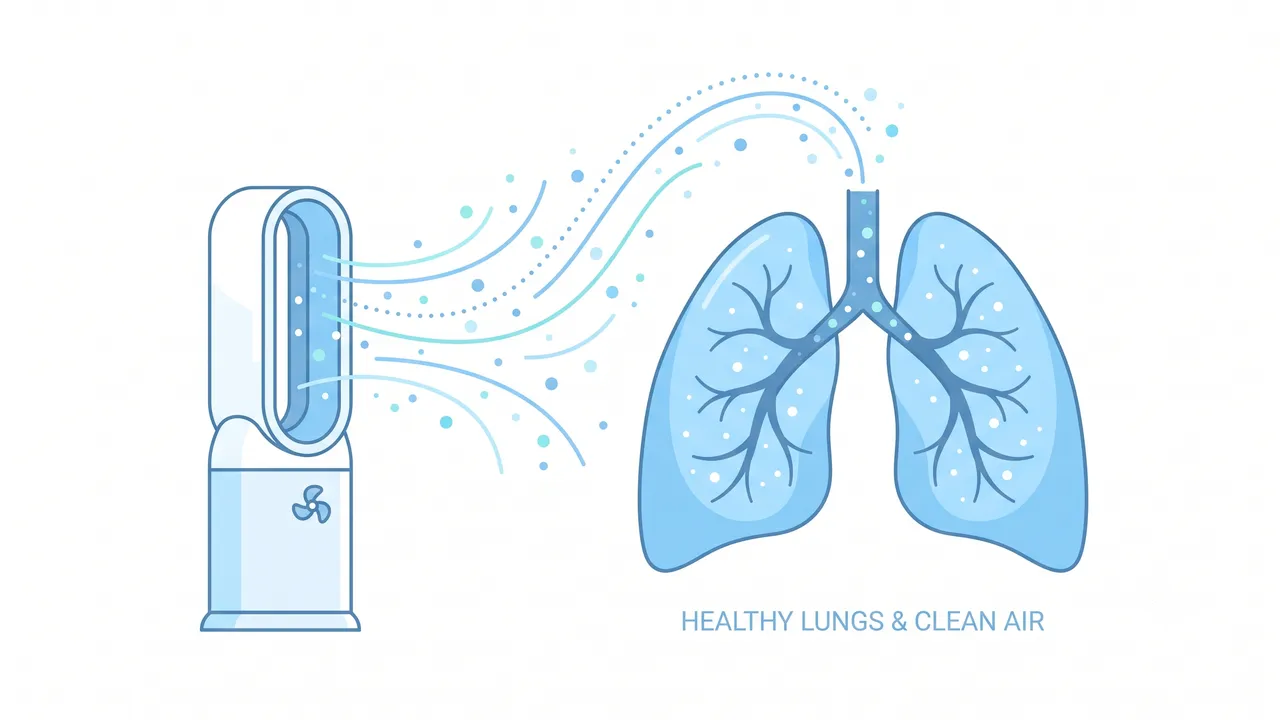
Dust mites are microscopic creatures that feed on dead skin cells and thrive in warm, humid environments. Making your bed, pillows, and upholstered furniture their ideal habitat. They’re the most common indoor allergen, affecting an estimated 20 million Americans. But the allergen isn’t the mite itself. It’s their fecal pellets containing Der p 1 and Der f 1 proteins. Understanding the physics of these particles explains what an air purifier can (and cannot) do for dust mite allergies.
The airborne window
Dust mite allergen particles are 10-40 microns when first produced. Relatively large and heavy. They settle onto surfaces quickly and spend the vast majority of their time embedded in bedding, carpets, and upholstery, not floating in the air. They only become airborne when disturbed. Making the bed, walking on carpet, sitting on upholstered furniture. And even then, they settle within 20-30 minutes as the particles break down into smaller fragments (2-10 microns).
This 20-30 minute airborne window is where HEPA purifiers can intercept allergens before you inhale them. But the purifier only captures what’s already airborne. The bulk of the allergen reservoir remains in your bedding and carpets, waiting to be disturbed again.
What the research shows
A 2019 systematic review in the International Journal of Environmental Health Research found that HEPA purifiers alone reduced dust mite allergy symptoms by a modest 15-20%. When combined with comprehensive mite avoidance measures. Allergen-proof mattress and pillow encasements, weekly hot-water (130F+) washing of bedding, and maintaining indoor humidity below 50%. Symptom improvement increased to 40-50%.
The takeaway: an air purifier is a useful component of dust mite allergy management, but it’s not sufficient by itself. It captures what becomes airborne; the bedding encasements and humidity control prevent the allergen from becoming airborne in the first place.
Read our complete allergy guide for more on allergy management.
What to look for in a purifier
- High Dust CADR: Mite allergens are in the larger particle range, so Dust CADR matters more than Smoke CADR for this use case. Calculate your room size to find the right CADR.
- Washable pre-filter: Mite allergen particles are relatively large and load pre-filters heavily. A washable pre-filter saves money and maintains airflow.
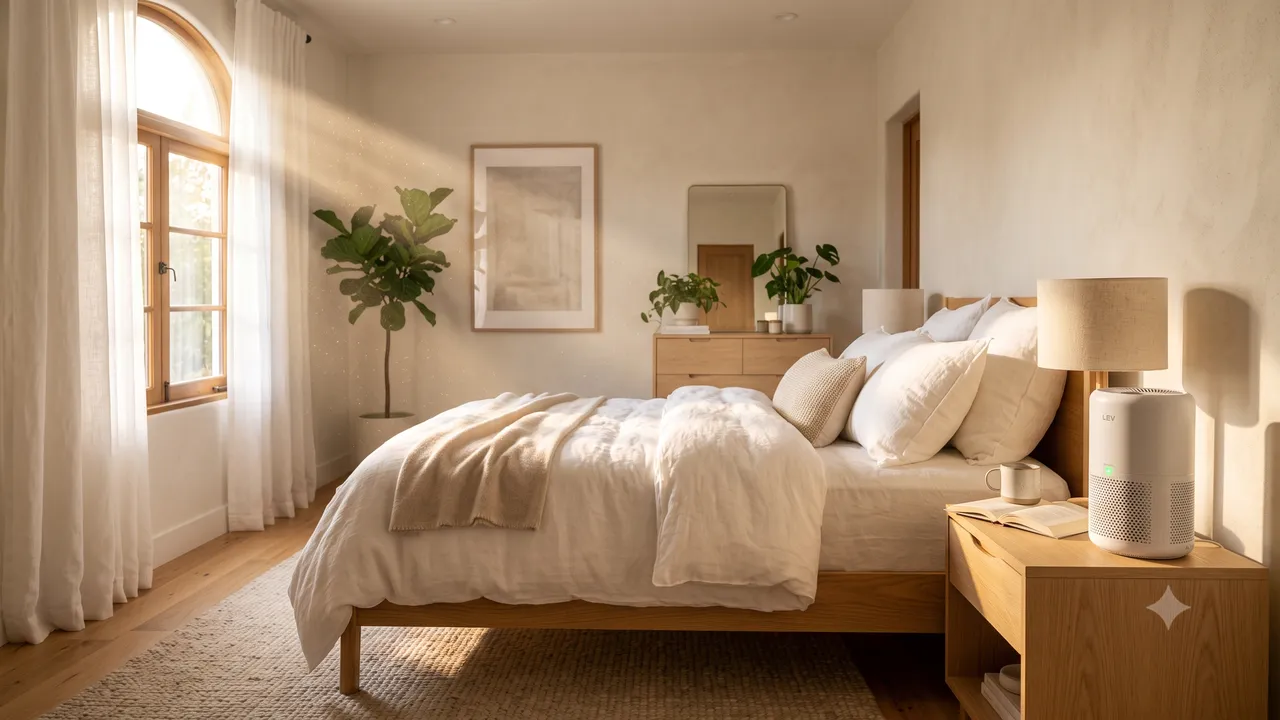
- Quiet bedroom operation: The bedroom is the most important room for dust mite control. You spend 7-9 hours there with your face near mite-laden pillows.
- Recommended models: Coway AP-1512HH (Dust CADR 240) and Winix 5500-2 (Dust CADR 246) are the best mid-range options.
| Purifier | Price | Dust CADR | Pre-filter | Noise (Low) | Best For |
|---|---|---|---|---|---|
| Coway AP-1512HH | $189 | 240 | Washable | 24 dB | Overall dust mites |
| Winix 5500-2 | $159 | 246 | Washable | 28 dB | Best value |
| Levoit Core 300 | $89 | 141 | Non-washable | 24 dB | Budget/small rooms |
| Blueair 211i Max | $339 | 350 | Non-washable | 31 dB | Large rooms |
The complete dust mite protocol
- Allergen-proof encasements on mattress, box spring, and pillows ($30-60 total). This traps the existing reservoir of allergens inside the mattress.
- Wash all bedding weekly in 130F+ water. This kills mites and removes accumulated pellets from bedding.
- Maintain humidity below 50% with a dehumidifier or air conditioning. Dust mites thrive in humidity above 50%. Read our humidity guide for more.
- Vacuum with a HEPA-filtered vacuum twice weekly. This removes pellets from carpet before they become airborne.
- Run HEPA purifier in the bedroom 24/7 on auto. This captures what becomes airborne between cleanings.
Why dust mite allergens are harder to capture than you think
Understanding the dust mite lifecycle explains why purifiers help but can’t solve the problem alone. A single dust mite produces about 20 fecal pellets per day. And those pellets, each roughly 10-40 microns, contain the Der p1 and Der f1 proteins that trigger human allergies. One gram of house dust (roughly a teaspoon) can contain 1,000+ dust mites and 250,000+ allergenic fecal pellets.
When you make the bed, sit on the couch, or walk across carpet, you launch these particles into the air. They’re heavy. Much heavier than smoke or pollen. And settle within 20-30 minutes. A HEPA purifier can only capture particles that are airborne and passing through the unit. It can’t touch the millions of pellets embedded in your mattress, carpet fibers, or upholstery.
This is why the “complete protocol” matters. The allergen-proof mattress encasement traps the existing reservoir of allergens inside the mattress. Weekly hot-water washing kills mites and removes accumulated pellets from bedding. The HEPA vacuum removes pellets from carpet before they become airborne. Only then does the air purifier do its job. Catching what becomes airborne between cleanings.
Which CADR number actually matters for dust mites
Manufacturers market their pollen CADR numbers because they’re the highest. For dust mite allergens, you need to look at the Dust CADR specifically. Mite allergens are heavier than pollen and behave differently in the air. They rise, hang for 20 minutes, then fall. A purifier needs high airflow to capture them during their brief window of airborne suspension.
For a standard 12’ x 14’ bedroom (168 sq ft), the math works out to needing a Dust CADR of roughly 160 at 4.8 ACH. The Coway AP-1512HH delivers 240 Dust CADR. Plenty of headroom. The Winix 5500-2 delivers 246. Both will clear a bedroom of airborne mite allergens in roughly 12-15 minutes after they’re disturbed.
What the numbers don’t tell you: placement matters enormously. Position the purifier near the foot of the bed, where your movements are most likely to kick allergens into the air. If possible, elevate it 2-3 feet off the ground on a small table or stool. Many mite allergens are disturbed at bed height, and having the intake at a similar height improves capture.
Read our placement guide for more tips.
The pre-filter as an underrated weapon
Mite allergens and the larger dust particles that carry them load pre-filters heavily. A purifier with a washable pre-filter. Like the Coway AP-1512HH or Winix 5500-2. Catches these large particles before they reach the HEPA, extending the expensive HEPA filter’s life by months.
Wash the pre-filter every 2 weeks. Just rinse it under warm water and let it dry completely before reinstalling. Takes 90 seconds. If you see visible gray-brown sludge washing off, that’s mite allergens, skin cells, and fiber dust. Satisfying proof the system is working.
Read our filter replacement guide for more on maintenance.
Common mistakes
Running the purifier only when symptoms flare. By the time you feel symptoms, you’ve already inhaled the allergens. Run the purifier 24/7 to catch allergens during their brief airborne window.
Ignoring humidity. Dust mites thrive in humidity above 50%. If you live in a humid climate, a dehumidifier is as important as a purifier. Aim for 30-50% relative humidity.
Not washing bedding hot enough. Water below 130F doesn’t kill dust mites. Use the hottest setting on your washing machine. If your machine doesn’t reach 130F, add a laundry additive designed to kill mites.
Skipping the encasements. The air purifier captures what becomes airborne. The encasements prevent the allergen from becoming airborne in the first place. Both are necessary.
Placing the purifier in the wrong spot. The purifier needs to be near where allergens are disturbed. Near the foot of the bed at bed height is ideal.
Total cost of dust mite management
| Item | Cost | Frequency | Annual Cost |
|---|---|---|---|
| Air purifier (Coway) | $189 | Once | $189 (year 1) |
| Replacement filters | $45 | Every 12 months | $45 |
| Mattress encasement | $40 | Every 3-5 years | $10 |
| Pillow encasements (2) | $20 | Every 2 years | $10 |
| Dehumidifier (if needed) | $150-250 | Once | $150-250 (year 1) |
| Total year 1 | $400-500 | ||
| Total years 2-5 (annual) | $65-75/year |
The upfront investment is significant, but the ongoing costs are minimal. And the symptom relief is worth it if you suffer from dust mite allergies.
Calculate your electricity cost for running the purifier and dehumidifier 24/7.
When to see a doctor
An air purifier is not a substitute for medical treatment. See an allergist if:
- Your symptoms persist despite using the complete protocol
- You experience asthma attacks or difficulty breathing
- You need antihistamines more than 3 days per week
- Your symptoms interfere with sleep or daily activities
- You’ve never been tested for specific allergens
An allergist can confirm whether dust mites are your actual trigger and recommend targeted treatment, including immunotherapy (allergy shots) that can provide long-term relief.
Related Articles
- Best Air Purifier for Allergies and Asthma
- Seasonal Allergy Survival Guide
- Air Purifier and Humidity Interaction Guide
- Best Air Purifier for Pets
Frequently Asked Questions
How long does it take for an air purifier to help with allergies?
Most people notice improvement within 24-48 hours of continuous operation. For maximum benefit, run the purifier 24/7 on medium. It takes about 30-60 minutes to complete one full air change in a typical bedroom.
Do air purifiers help with dust mites?
Yes, HEPA purifiers capture airborne dust mite allergens (feces and body fragments). However, dust mites also live in bedding, carpets, and upholstery. Combine air purification with allergen-proof mattress and pillow covers for best results.
Should I run the air purifier with windows open?
No, for allergy relief keep windows closed during high pollen days. The purifier works by cleaning the air already in the room—open windows introduce new allergens. Use the purifier’s air quality sensor (if available) to monitor when to ventilate.
Can air purifiers make allergies worse?
Only if they produce ozone (ionizers, some UV-C models). Ozone is a respiratory irritant that can worsen allergy symptoms. Choose only True HEPA mechanical filtration without ionizers. If you notice increased symptoms, check if your purifier has an ionizer feature and disable it.
Where should I place the air purifier for allergies?
Place it in the bedroom (where you spend 7-9 hours) near the bed but not blowing directly on you. Avoid corners and curtains that block airflow. For severe allergies, consider a second unit in the living room or home office.
Disclosure: We may earn a commission from qualifying purchases.
Support This Guide
Helpful? Add The Air Purifier Guide as a preferred source on Google so our guides show up in your search results.
Related Articles

Coway Mighty2 vs AP-1512HH (2026)
Coway's Mighty2 replaced the AP-1512HH as Wirecutter's top pick. We compare CADR, noise, sensors, filter costs, and whether the older unit is still the smarter buy.

KNKA APH4000 Review: $150 Dark Horse
KNKA's APH4000 is one of Amazon's best-selling purifiers at $150. We check the AHAM certification, decode the 1,695 sq ft claim, and compare it to Levoit and Coway.

Levoit Core 300 vs 300-P: What Changed
Levoit quietly replaced the Core 300 with the Core 300-P. We explain the AHAM certification, whether filters still fit, and which one you should actually buy.

Shark NeverChange HP302 Review
Shark's NeverChange HP302 promises 5 years on one filter. We dig into the real running costs, the odor neutralizer catch, and whether it beats cheaper rivals.

Winix 5510 vs 5500-2: 2026 Verdict
The Winix 5500-2 is discontinued and the 5510 takes over. We compare CADR, noise, filter costs, and the one compatibility problem nobody mentions.
🛒 Products Mentioned
As an Amazon Associate, we earn from qualifying purchases.
Covers indoor air quality science, respiratory health, allergy management, and wildfire smoke protection.
View all articles by Sarah →