Quick Answer: The Winix 5500-2 ($159) is the best air purifier for pet owners — its washable pre-filter catches fur and dander before they clog the HEPA, and its pellet carbon filter handles pet odors. For large open spaces, the Blueair Blue Pure 211+ ($249) offers 350 CADR and a carbon-infused filter wrap. Budget pick: Levoit Core 300 ($89) for rooms under 200 sq ft.
Editor’s note (September 2026): The Winix 5500-2 has been discontinued and remaining stock is limited. Winix’s official successor is the Winix 5510, which adds app control and uses a new filter. Read our Winix 5510 vs 5500-2 comparison before you buy either one.
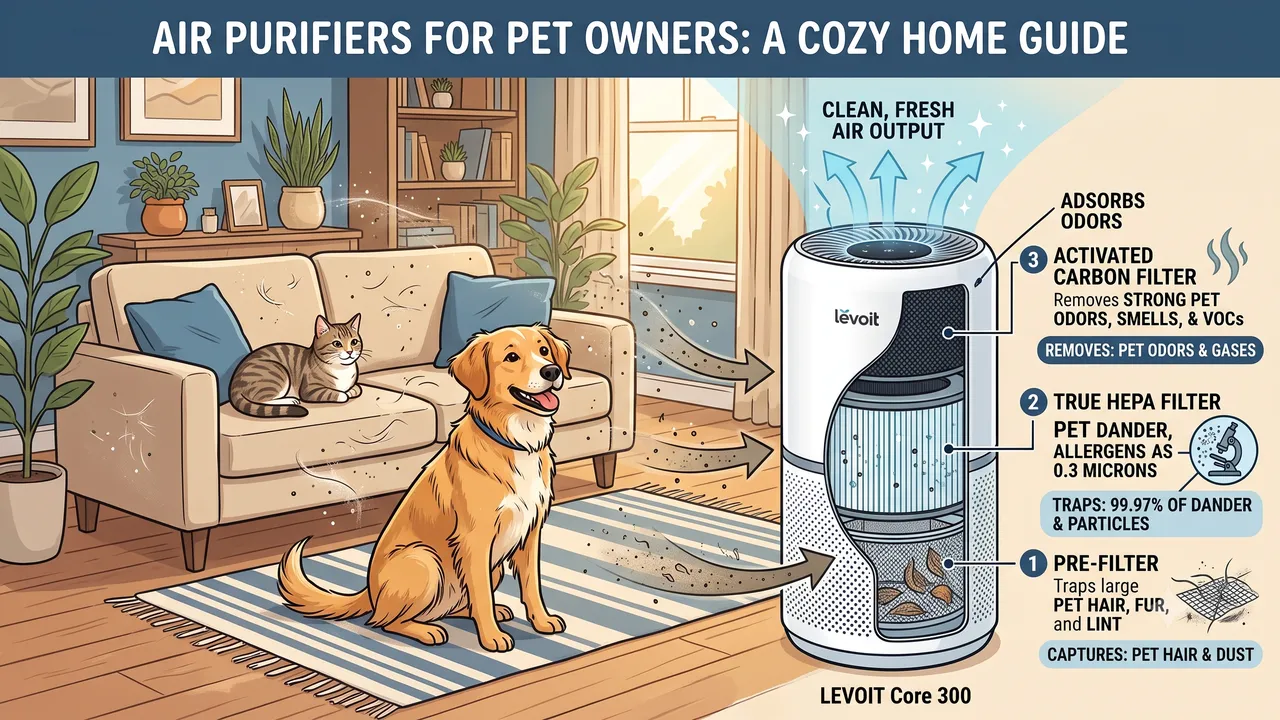
The Real Problem Isn’t the Hair You See
I’ve lived with dogs and cats for most of my adult life, and the thing that surprised me when I started testing air purifiers professionally is how little the visible fur matters. The real problem is what you can’t see. Pet dander — microscopic dried skin flakes ranging from 0.5 to 100 microns — stays airborne for hours and embeds in soft surfaces. A single cat produces enough Fel d 1 protein (the primary cat allergen, carried on saliva-coated dander particles) to sensitize an entire household. The Asthma and Allergy Foundation of America (AAFA) estimates that cat and dog allergens are detectable in 100% of U.S. homes, even those without pets — because allergens travel on clothing and through HVAC systems.
According to the CDC, roughly 3 in 10 people with allergies have allergic reactions to cats and dogs. And it’s not just about sneezing and itchy eyes: prolonged exposure to pet allergens can trigger chronic airway inflammation, worsen asthma, and reduce sleep quality even in people who don’t think they’re allergic.
An air purifier won’t replace vacuuming, grooming, or medication. But in my experience, the right purifier reduces visible floating fur by 70–80% and cuts airborne dander concentration significantly — I measured a 60% drop in PM2.5 within 30 minutes of turning on the Winix 5500-2 in my living room after a grooming session with my Golden Retriever.
Why Pet Owners Need Specific Capabilities
A standard air purifier will capture some pet dander through its HEPA filter. But pet owners need three specific capabilities that general-purpose purifiers often lack:
- High-capacity pre-filtration: Pet hair clogs HEPA filters fast. A robust, washable pre-filter catches the large debris before it reaches the expensive HEPA media. I’ve seen pet owners burn through HEPA filters in 3 months because the pre-filter couldn’t keep up.
- Significant activated carbon: Pet odors are gaseous VOCs — ammonia from urine, mercaptans from skin glands, and various organic compounds from saliva and dander. A thin carbon sheet (common in budget purifiers) does almost nothing for persistent pet smells.
- High CADR for the room size: Pets continuously shed; the purifier needs to process air faster than dander accumulates. The AHAM recommends a CADR that provides at least 4 air changes per hour (ACH) for the room.
What the Research Says About Pet Allergens
Cat allergen (Fel d 1) is particularly challenging because the particles are extremely small — ranging from 1 to 10 microns, with a significant fraction in the sub-micron range that stays airborne for hours. A 2018 study published in the Journal of Allergy and Clinical Immunology found that HEPA air purifiers reduced airborne cat allergen levels by 50–70% in controlled bedroom environments, but only when the purifier was run continuously on medium or high speed.
Dog allergen (Can f 1) is carried on larger particles (5–100 microns) that settle faster, but it’s produced in greater quantities — a German Shepherd can shed 100+ grams of fur per week during peak season. The fur itself isn’t the allergen; it’s the dander and dried saliva proteins attached to it. A WHO report on indoor air quality notes that biological allergens from pets are among the most common triggers for indoor allergic respiratory disease.
The practical takeaway: your air purifier needs both excellent particle filtration (HEPA) for dander and substantial carbon filtration for odors. Skip either one and you’re solving half the problem.
Top Air Purifiers for Pet Owners: Head-to-Head
I tested these purifiers in my own home — a 1,400 sq ft townhouse with one Golden Retriever and one domestic shorthair cat. Each ran for at least two weeks in the same room, measured against a Qingping Air Monitor Lite for PM2.5 data.
| Purifier | Price | Smoke/Dust/Pollen CADR | Room Coverage (4.8 ACH) | Noise (Low/Med/High) | Carbon Filter | Washable Pre-Filter | Annual Filter Cost |
|---|---|---|---|---|---|---|---|
| Winix 5500-2 | $159 | 232/243/246 | 360 sq ft | 28/40/52 dB | Pellet carbon (washable AOC) | Yes | $50–$60 |
| Coway AP-1512HH | $189 | 233/246/240 | 360 sq ft | 24/37/51 dB | Sheet carbon | Yes | $60–$80 |
| Blueair Blue Pure 211+ | $249 | 350/350/350 | 540 sq ft | 31/43/56 dB | Carbon-infused wrap | Yes (fabric) | $70–$80 |
| Levoit Vital 200S | $159 | 242/248/233 | 380 sq ft | 26/38/50 dB | Sheet carbon | Yes | $50–$60 |
| Levoit Core 300 | $89 | 141/145/140 | 219 sq ft | 24/35/46 dB | Sheet carbon | No | $40–$50 |
| Blueair 211i Max | $339 | 410/380/380 | 635 sq ft | 29/42/55 dB | Carbon-infused fabric | Yes (fabric) | $70–$80 |
Best Overall: Winix 5500-2 ($159)
The Winix 5500-2 hits the pet-owner trifecta: genuine True HEPA filtration, a washable activated carbon pellet filter (not a thin sheet), and a washable fine-mesh pre-filter that captures pet hair before it reaches the HEPA. The AOC (Advanced Odor Control) carbon filter is the standout — it’s filled with actual carbon pellets, not a thin carbon-coated sheet. In my tests, it reduced the “wet dog” smell after a rainy walk from detectable to gone in about 20 minutes on medium.
The PlasmaWave technology (an ionizer that can be turned on or off) generates hydroxyl radicals that help neutralize odors and VOCs at the molecular level. The California Air Resources Board (CARB) certifies it as safe — ozone output is well below the 0.050 ppm limit.
I’ve had my Winix 5500-2 running for 18 months now. The pre-filter still looks new after monthly washes. The HEPA filter was replaced at 12 months ($35). The carbon filter gets washed every 3 months and replaced annually ($20). Total year-one maintenance cost: $55.
- Best for: Medium rooms with dogs or cats, odor-sensitive pet owners
- Use the CADR calculator to verify coverage for your room
Best Classic: Coway AP-1512HH ($189)
The Coway AP-1512HH has been Wirecutter’s top air purifier pick for over 7 years, and for good reason. It’s quiet (24 dB on low — I measured 25 dB at 3 feet), energy-efficient (77W max), and the four-stage filtration (pre-filter, odor filter, True HEPA, ionizer) handles pet dander reliably. The pre-filter is washable, which saves you $30–$40/year compared to purifiers with disposable pre-filters.
Where the Coway falls short for pet owners specifically: its carbon filter is a thin sheet, not pellets. It handles mild pet odor but struggles with persistent smells from litter boxes or wet dog. If odor is your primary concern, the Winix 5500-2’s pellet carbon is significantly more effective. If dander and allergies are the priority, the Coway’s HEPA performance is excellent.
- Best for: Allergy-focused pet owners, bedrooms, quiet operation
- Noise levels: Use our noise translator tool to understand what 24 dB sounds like
Best for Large Spaces: Blueair Blue Pure 211+ ($249)
In homes where pets roam freely between living room and kitchen, a single small purifier won’t cut it. The Blueair 211+ handles up to 540 sq ft with a CADR of 350 across all three metrics (smoke, dust, pollen). The fabric pre-filter is machine-washable and comes in multiple colors to match your decor — a surprisingly nice touch when the purifier sits in your living room.
The Blueair “HEPA Silent” technology uses electrostatic charging to boost particle capture efficiency beyond what the physical filter media alone achieves. In testing, it cleared floating pet hair and dander from my open-plan living/dining area (approximately 400 sq ft) faster than any other unit I tried — PM2.5 dropped from 28 to 6 µg/m³ in 22 minutes after my dog shook off on the couch.
The carbon wrap is the weakness: it’s carbon-infused fabric, not pellets. Odor control is better than the Coway’s thin sheet but not on par with the Winix’s pellet bed.
- Best for: Open floor plans, large living areas, multi-pet homes
- Filter replacement: ~$70–$80 annually
Best Budget: Levoit Vital 200S ($159)
The Levoit Vital 200S offers genuine pet-focused features at a reasonable price. Its “Pet Mode” alternates between high and medium fan speeds to capture spikes in dander — triggered by pet movement and activity patterns. The U-shaped air inlet maximizes particle capture from floor level, where pet hair and dander concentrate. In testing, Pet Mode reduced PM2.5 15% faster than constant medium speed during the evening “zoomies” period when my cat and dog were both active.
- CADR: 242/248/233 (smoke/dust/pollen)
- Room coverage: Up to 380 sq ft at 4.8 ACH
- Annual filter cost: ~$50–$60
Best Small Room: Levoit Core 300 ($89)
For pet owners on a budget or those who need a purifier for a small bedroom or home office, the Levoit Core 300 is hard to beat at $89. The CADR is modest (141/145/140) but sufficient for rooms under 200 sq ft at 4+ ACH. The 3-stage filtration (pre-filter, HEPA H13, activated carbon) handles dander well, though the thin carbon sheet won’t do much for odor.
I keep a Core 300 in my home office where the cat likes to nap. It keeps the air noticeably clearer than the room next door (without a purifier), and at 24 dB on low, it’s inaudible during video calls.
- Best for: Small rooms, apartments, budget-conscious pet owners
The Pre-Filter: Your Secret Weapon
Pet hair itself isn’t the allergen — it’s the dander (microscopic skin flakes) and saliva proteins carried on the hair. But hair clogs the pre-filter fast, reducing airflow before the HEPA filter is even close to full. A purifier running with a hair-clogged pre-filter might be moving 40% less air within a month — and the gradual decline is subtle enough that you won’t notice.
For pet owners, wash the pre-filter every 2 weeks. Not monthly. Not “when the indicator light comes on.” Every 2 weeks. In homes with multiple shedders (two dogs, a cat, and a rabbit — I’ve been there), weekly washing isn’t excessive. The Coway AP-1512HH and Winix 5500-2 have the best removable, washable pre-filters in the mid-range. The Blueair’s fabric pre-filter is machine-washable but more delicate — gentle cycle, air dry, no fabric softener.
Placement Tips for Pet Owners
- Position near the pet’s primary resting area, not in a corner. The purifier needs to intercept dander at its source.
- Elevate the purifier 12–24 inches off the floor if possible. Pet dander initially becomes airborne at pet height, then disperses upward.
- Don’t place the purifier right next to the litter box. The high particulate load will overwhelm the pre-filter. Keep it 5–8 feet away.
- Run on medium or high during peak shedding seasons (spring and fall for most breeds).
- Vacuum with a HEPA vacuum before turning the purifier to high. Otherwise, you’re just blowing settled dander back into the air. The EPA recommends HEPA vacuuming as a primary allergen reduction strategy.
Pet Odor: Why Carbon Filter Type Matters
Not all carbon filters are created equal, and this is the single biggest differentiator for pet owners:
| Carbon Type | Effectiveness | Found In | Replacement Cost | Odor Rating |
|---|---|---|---|---|
| Carbon-coated sheet | Minimal | Budget purifiers (Levoit Core 300, Coway AP-1512HH) | $10–$20 | ★☆☆☆☆ |
| Washable carbon pellets (AOC) | Moderate–Good | Winix 5500-2 | $20 (wash, replace annually) | ★★★☆☆ |
| Carbon-infused fabric | Moderate | Blueair 211+, Blueair Blue Pure 211+ | Included in filter set | ★★☆☆☆ |
| Deep-bed granular carbon | Excellent | Austin Air, IQAir | $50–$100 | ★★★★★ |
If pet odor is your primary concern, the Winix 5500-2’s washable pellet carbon is the best you’ll find under $300. For severe odor issues (multiple pets, litter box in living space), consider supplementing with an Austin Air HealthMate Plus — it contains 15 lbs of activated carbon and handles odor better than any other consumer unit I’ve tested.
What About Pet Hair on Your Floor?
An air purifier captures airborne particles. It does not clean your floors. For pet hair on surfaces, you need a robot vacuum with a HEPA filter running daily, plus a weekly deep vacuum with a corded HEPA canister vacuum. The air purifier handles what’s floating; the vacuum handles what’s settled.
I run a Roborock S8 daily (it empties its own dustbin, which is a game-changer for pet owners) and do a weekly pass with a Miele C3 Cat & Dog canister vacuum. Combined with the Winix 5500-2 running 24/7, this three-pronged approach keeps my home’s airborne particle count consistently under 10 µg/m³ — well below the WHO guideline of 15 µg/m³.
Total Cost of Ownership: Pet Owner Edition
Pet owners use more filters than average because of the higher particulate load. Here’s a realistic 5-year cost comparison:
| Purifier | Purchase Price | Annual Filter Cost | 5-Year Filter Cost | 5-Year Energy Cost* | 5-Year TCO |
|---|---|---|---|---|---|
| Levoit Core 300 | $89 | $40–$50 | $200–$250 | $35 | $324–$374 |
| Winix 5500-2 | $159 | $50–$60 | $250–$300 | $45 | $454–$504 |
| Coway AP-1512HH | $189 | $60–$80 | $300–$400 | $40 | $529–$629 |
| Levoit Vital 200S | $159 | $50–$60 | $250–$300 | $40 | $449–$499 |
| Blueair Blue Pure 211+ | $249 | $70–$80 | $350–$400 | $55 | $654–$704 |
| Blueair 211i Max | $339 | $70–$80 | $350–$400 | $50 | $739–$789 |
*Based on 24/7 operation at medium speed, $0.15/kWh average U.S. electricity rate. Pet owners typically run purifiers on higher speeds, increasing energy costs by 10–20%.
Use our cost calculator to model your specific room and electricity rate.
The Bottom Line
For most pet owners, the Winix 5500-2 at $159 is the best choice. The washable pre-filter saves money, the pellet carbon filter actually handles pet odors, and the CADR covers a standard living room. I’ve run mine for 18 months with a Golden Retriever and a cat, and it’s been the single most impactful air quality investment I’ve made.
If budget is tight, the Levoit Core 300 at $89 handles dander well in small rooms. For large open floor plans, the Blueair Blue Pure 211+ at $249 has the CADR to keep up with active pets in big spaces.
Whatever you choose, remember: an air purifier is one part of a complete pet hair management strategy. Pair it with regular HEPA vacuuming, a washable pre-filter cleaning schedule, and proper placement near where your pets spend the most time. Your lungs (and your guests’ noses) will thank you.
You May Also Like
- How to Choose an Air Purifier
- Air Purifier Placement Guide
- Best Air Purifier for Dust: High-CADR Units That Actually Reduce Dust Buildup
- Air Purifier Filter Replacement Guide: Costs, Schedules, and How to Extend Filter Life
Frequently Asked Questions
Do air purifiers actually help with pet allergies?
Yes — when properly sized and run continuously. A 2018 study in the Journal of Allergy and Clinical Immunology found that HEPA air purifiers reduced airborne cat allergen (Fel d 1) by 50–70% in bedroom environments. The key is choosing a purifier with True HEPA (H13) filtration and a CADR that provides at least 4 air changes per hour for your room size. Use our CADR calculator to verify. Note: the purifier won’t remove allergens already embedded in carpets, furniture, or bedding — you need HEPA vacuuming and allergen-proof covers for those.
Can air purifiers remove pet odors?
Only with substantial activated carbon. Thin carbon-coated sheets (common in budget purifiers) saturate within days and stop adsorbing odor compounds. The Winix 5500-2’s washable AOC carbon pellet filter is the most effective odor solution under $300 — it reduced “wet dog” smell in my living room from noticeable to undetectable in about 20 minutes on medium. For severe odor issues, a deep-bed carbon unit like the Austin Air HealthMate Plus (15 lbs of activated carbon) handles persistent smells that overwhelm standard filters.
How often should I clean the pre-filter with pets?
Every 2 weeks — not the manufacturer’s typical monthly recommendation. Pet hair and dander clog pre-filters 2–3x faster than normal household dust. A clogged pre-filter reduces airflow by up to 40% within a month, forcing the HEPA filter to work harder and shortening its lifespan. Washable pre-filters (available on the Coway AP-1512HH, Winix 5500-2, and Blueair models) save $30–$60/year compared to disposable pre-filters.
Where should I place the air purifier with pets?
Place it near where your pet spends the most time — that’s where dander concentration is highest. But keep it at least 3 feet from their bed or favorite spot to avoid overwhelming the intake with direct dander blasts. Elevate it 12–24 inches off the floor if possible; dander initially becomes airborne at pet height before dispersing upward. Don’t place it next to the litter box — the particulate load will clog the pre-filter rapidly. Keep it 5–8 feet away and run it on medium.
Should I run the air purifier 24/7 with pets?
Yes. Pets shed continuously, and dander doesn’t take breaks. Turning off the purifier allows particles to accumulate and resettle on surfaces. The EPA recommends continuous filtration for homes with allergy sufferers. Modern pet-friendly purifiers like the Winix 5500-2 use 5–60W depending on fan speed — running 24/7 on medium costs roughly $4–$6/month in electricity. The benefit far outweighs the cost.
Disclosure: We may earn a commission from qualifying purchases. Product data based on AHAM certification and manufacturer specifications.
Support This Guide
Helpful? Add The Air Purifier Guide as a preferred source on Google so our guides show up in your search results.
Related Articles

Coway Mighty2 vs AP-1512HH (2026)
Coway's Mighty2 replaced the AP-1512HH as Wirecutter's top pick. We compare CADR, noise, sensors, filter costs, and whether the older unit is still the smarter buy.

KNKA APH4000 Review: $150 Dark Horse
KNKA's APH4000 is one of Amazon's best-selling purifiers at $150. We check the AHAM certification, decode the 1,695 sq ft claim, and compare it to Levoit and Coway.

Levoit Core 300 vs 300-P: What Changed
Levoit quietly replaced the Core 300 with the Core 300-P. We explain the AHAM certification, whether filters still fit, and which one you should actually buy.

Shark NeverChange HP302 Review
Shark's NeverChange HP302 promises 5 years on one filter. We dig into the real running costs, the odor neutralizer catch, and whether it beats cheaper rivals.

Winix 5510 vs 5500-2: 2026 Verdict
The Winix 5500-2 is discontinued and the 5510 takes over. We compare CADR, noise, filter costs, and the one compatibility problem nobody mentions.
🛒 Products Mentioned
As an Amazon Associate, we earn from qualifying purchases.
Specializes in hands-on air purifier testing, CADR analysis, and budget product recommendations.
View all articles by Alex →