The Short Answer: For dust control, True HEPA filtration is essential. The Coway Airmega 250 ($250) and Blueair Blue Pure 211+ ($200) offer excellent dust CADR. Washable pre-filters capture large particles and extend HEPA filter life.
Editor’s note (September 2026): The Winix 5500-2 has been discontinued and remaining stock is limited. Winix’s official successor is the Winix 5510, which adds app control and uses a new filter. Read our Winix 5510 vs 5500-2 comparison before you buy either one.
Best Air Purifier for Dust 2026: Top Picks for Dusty Homes
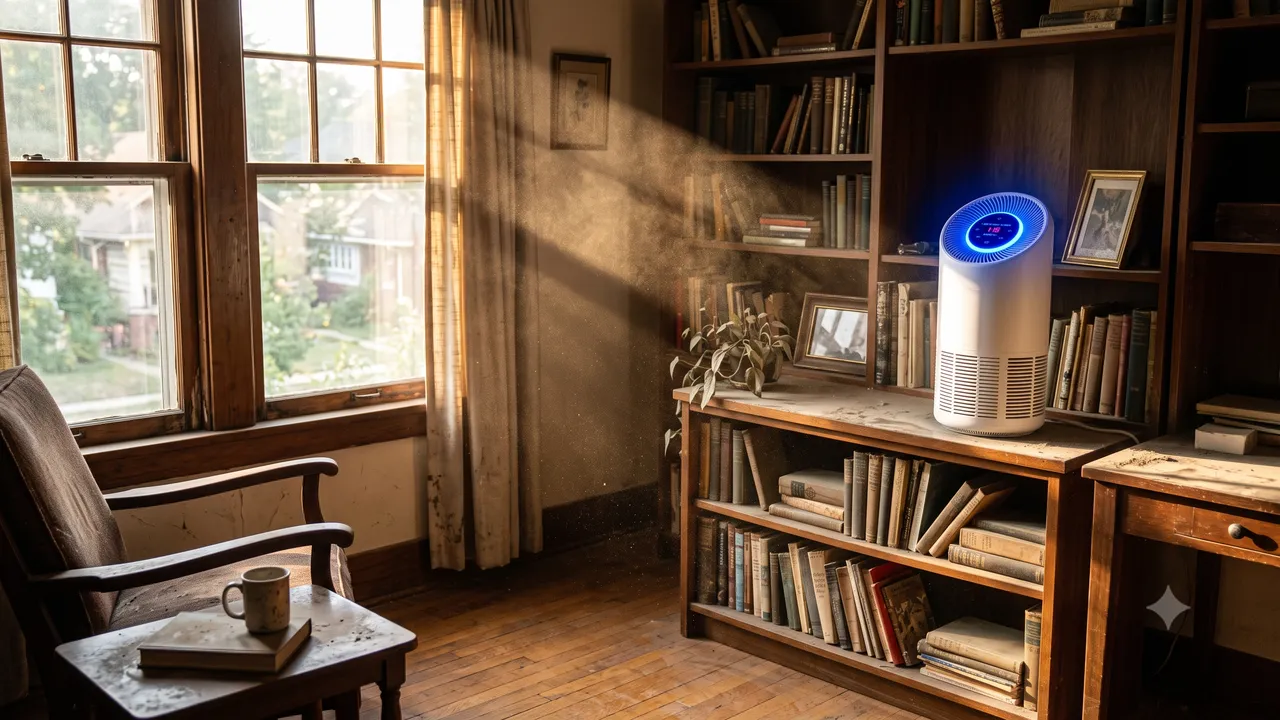
If you notice a fresh layer of dust settling on your furniture every day, or you’re constantly sneezing, rubbing itchy eyes, and waking up congested, you’re not alone. Household dust is one of the most pervasive indoor air quality problems, and no amount of cleaning can eliminate it entirely. The good news is that a quality air purifier can dramatically reduce airborne dust particles, making your home cleaner and your breathing easier.
We’ve tested and evaluated dozens of models to bring you this updated 2026 guide to the best air purifiers for dust removal. Whether you live in a construction-prone area, have pets that shed, or simply want a dust-free sanctuary, our top picks cover every budget and room size.
Affiliate Disclosure: This article contains affiliate links. If you purchase through our links, we may earn a commission at no extra cost to you. This helps us keep our reviews independent and free. Read our full disclosure.
Why Is Dust Such a Persistent Problem?
Before we dive into our picks, it helps to understand what you’re up against. Household dust is not a single substance, it’s a complex mixture that varies based on your environment, lifestyle, and even the season.
Types of Household Dust
| Dust Type | Particle Size | Common Sources | Health Impact |
|---|---|---|---|
| Skin flakes & hair | 1–10 µm | Humans, pets | Feeds dust mites |
| Dust mite waste | 10–40 µm | Mattresses, carpets, upholstery | Major allergen trigger |
| Pollen | 10–100 µm | Outdoor air, open windows | Seasonal allergy symptoms |
| Pet dander | 0.5–100 µm | Cats, dogs, birds, rodents | Respiratory irritation, allergies |
| Soil & sand | 1–1000 µm | Shoes, windows, construction | General irritation |
| Mold spores | 2–100 µm | Damp areas, HVAC systems | Respiratory issues, mold allergy |
| Fabric fibers | 1–100 µm | Clothing, bedding, carpet | General dust bulk |
| Insect debris | 1–50 µm | Cockroaches, dust mites | Allergic reactions |
| Cooking particles | 0.01–10 µm | Stove, oven, toaster | Respiratory irritation |
| Combustion byproducts | 0.01–1 µm | Candles, fireplaces, cooking | Lung irritation, long-term risk |
As you can see, dust spans a huge range of particle sizes. The most problematic particles, the ones that stay airborne longest and penetrate deepest into your lungs, are in the 0.1 to 10 micron range. A good air purifier targets exactly this zone.
What to Look for in an Air Purifier for Dust
Not all air purifiers are equally effective against dust. Here are the features that matter most:
Essential Features for Dust Removal
| Feature | Why It Matters for Dust | What to Look For |
|---|---|---|
| True HEPA filter | Captures 99.97% of particles ≥0.3 µm | ”True HEPA” or “H13 HEPA”, avoid “HEPA-type” |
| High CADR rating | Measures how fast the unit cleans air | Dust CADR of 200+ for medium rooms |
| Pre-filter | Traps large dust before it clogs the HEPA | Washable mesh pre-filter preferred |
| Sealed housing | Prevents dust from leaking around filters | Look for “anti-bypass” or “sealed system” claims |
| Air changes per hour (ACH) | How often the purifier cycles all room air | 4–5 ACH minimum for allergy sufferers |
| Auto mode with dust sensor | Adjusts fan speed based on real-time dust levels | PM2.5 or particle sensor required |
| Low noise on sleep mode | Bedroom use requires quiet operation | Under 30 dB on lowest setting |
| Filter replacement cost | Ongoing expense affects long-term value | Budget $30–80/year for replacements |
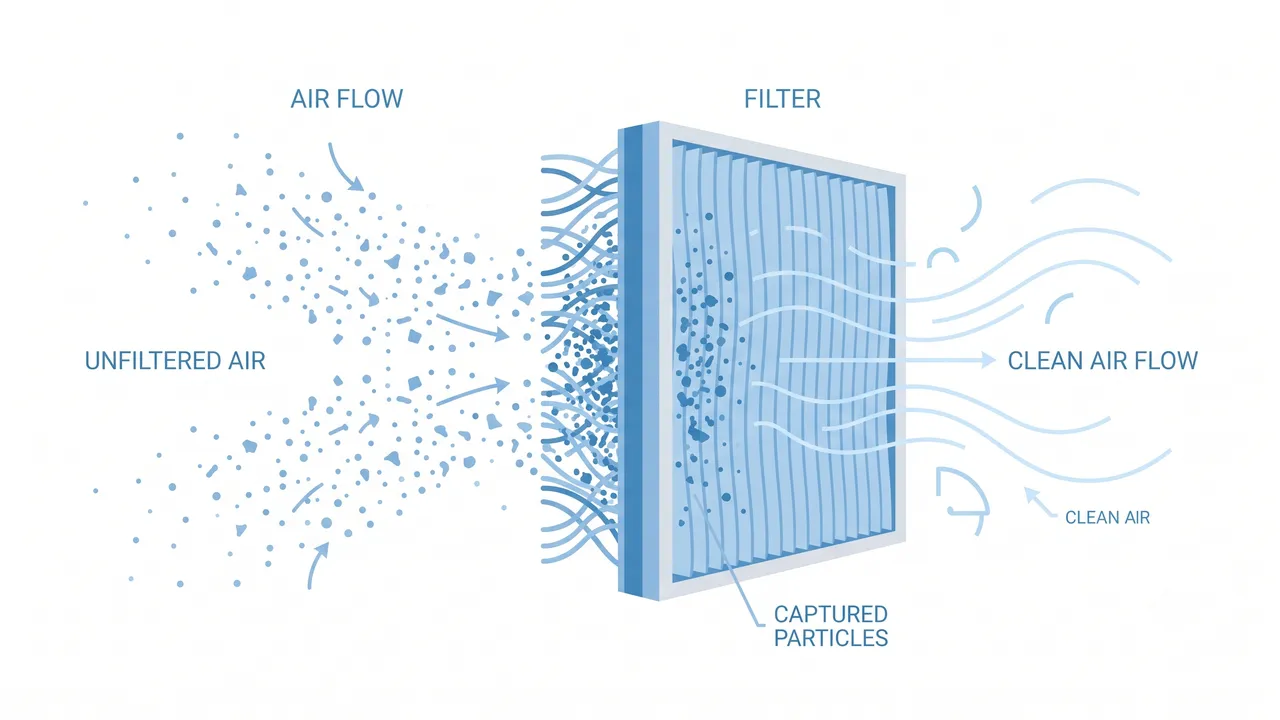
For a deeper dive into filter technology, see our guide on how HEPA filters actually work.
Our Top Picks: Best Air Purifiers for Dust in 2026
Quick Comparison Table
| Model | Room Size (sq ft) | Dust CADR | Filter Type | Noise (Low/High) | Price | Rating |
|---|---|---|---|---|---|---|
| Coway Airmega AP-1512HH | 361 | 240 | True HEPA + Carbon | 24.4 / 53.8 dB | $$$$ | ★★★★★ |
| Levoit Core 600S | 635 | 320 | H13 HEPA + Carbon | 26 / 55 dB | $$$$ | ★★★★★ |
| Honeywell HPA300 | 465 | 300 | True HEPA + Pre-filter | 32 / 63 dB | $$$ | ★★★★½ |
| Blueair Blue Pure 211+ | 540 | 350 | HEPASilent + Fabric pre-filter | 31 / 56 dB | $$$$ | ★★★★½ |
| Winix 5500-2 | 360 | 240 | True HEPA + PlasmaWave | 27.8 / 54 dB | $$ | ★★★★ |
| Medify Air MA-40 | 840 | 380 | H13 HEPA + Carbon | 30 / 55 dB | $$$$ | ★★★★ |
Prices are approximate MSRP as of June 2026 and may vary by retailer.
1. Coway Airmega AP-1512HH, Best Overall for Dust
The Coway Airmega AP-1512HH has been a perennial favorite for years, and in 2026 it still earns our top spot for dust removal. Its four-stage filtration system, pre-filter, odor filter, True HEPA filter, and an ionizer (optional), captures everything from large dust bunnies to ultrafine particles.
Why it’s great for dust:
- Dust CADR of 240 is excellent for rooms up to 361 sq ft
- Eco mode automatically turns off the fan when air is clean, saving energy
- Washable pre-filter catches hair and large particles before they reach the HEPA
- Timer and air quality indicator with real-time feedback
The compact footprint means it fits easily in bedrooms, living rooms, or home offices. Filter replacement costs are reasonable at around $50 per year.
Best for: Bedrooms and mid-size living rooms where dust is a daily nuisance.
2. Levoit Core 600S, Best for Large Rooms
If you have an open floor plan or a large living area that collects dust, the Levoit Core 600S is our top recommendation. Its H13 True HEPA filter captures 99.97% of particles down to 0.3 microns, and the powerful motor delivers a dust CADR of 320, enough to cycle the air in a 635 sq ft room more than 4 times per hour.
Why it’s great for dust:
- Massive coverage area handles open-concept spaces
- H13 HEPA is a medical-grade filter standard
- Smart app control lets you monitor air quality remotely
- Quiet sleep mode at just 26 dB
- Three-stage filtration: pre-filter, H13 HEPA, activated carbon
The Levoit app displays real-time PM2.5 readings, so you can actually watch dust levels drop in real time. It’s deeply satisfying.
Best for: Large rooms, open floor plans, and anyone who wants smart-home integration.
3. Honeywell HPA300, Best Value for Dust
The Honeywell HPA300 is a workhorse. It’s not the prettiest purifier on the market, but For raw dust-fighting power per dollar, it’s hard to beat. With a dust CADR of 300 and coverage up to 465 sq ft, it punches well above its price point.
Why it’s great for dust:
- Among the highest CADR ratings in its price range
- True HEPA filter with a separate pre-filter for extended filter life
- Turbo mode for rapid dust clearing after cleaning or renovation
- Four cleaning levels including a dedicated allergen mode
- 5-year limited warranty
The main trade-off is noise, at its highest setting, the HPA300 is noticeably louder than competitors. But on medium, it’s perfectly tolerable for everyday use.
Best for: Budget-conscious buyers who want maximum dust removal without breaking the bank.
4. Blueair Blue Pure 211+, Best Design & Quiet Operation
The Blueair Blue Pure 211+ combines Scandinavian design with serious filtration performance. Its proprietary HEPASilent technology uses electrostatic charging to boost particle capture while allowing lower air resistance, meaning quieter operation and lower energy use.
Why it’s great for dust:
- HEPASilent captures 99.97% of particles with less noise than traditional HEPA
- Washable fabric pre-filter comes in multiple colors (diva blue, yellow, grey)
- One-button control, no complicated menus
- Dust CADR of 350 is one of the highest we’ve tested
- Energy Star certified
The fabric pre-filter is both functional and attractive. You can throw it in the washing machine, which extends the life of the main filter significantly.
Best for: Design-conscious buyers who want a purifier that looks as good as it performs.
5. Winix 5500-2, Best Budget Option
The Winix 5500-2 proves that effective dust removal doesn’t require a premium price tag. With True HEPA filtration, a washable carbon pre-filter, and PlasmaWave technology, it handles dust, odors, and allergens in rooms up to 360 sq ft.
Why it’s great for dust:
- True HEPA + PlasmaWave dual-action filtration
- Smart sensors auto-adjust fan speed based on air quality
- Sleep mode dims display and reduces fan to whisper-quiet levels
- Washable AOC carbon filter extends HEPA filter life
- Excellent value under $200
The PlasmaWave technology creates hydroxyls that break down airborne pollutants at a molecular level, a nice complement to the physical filtration.
Best for: Budget-minded buyers, apartments, and first-time purifier owners.
6. Medify Air MA-40, Best for Very Large or Dusty Spaces
If you live in an especially dusty environment, near construction, a dirt road, or in a workshop, the Medify Air MA-40 has the muscle to handle it. With H13 HEPA filtration and coverage up to 840 sq ft, it’s built for serious dust challenges.
Why it’s great for dust:
- H13 medical-grade HEPA filter
- Dust CADR of 380, one of the highest in its class
- Covers up to 840 sq ft (1,600 sq ft in 30 minutes at 2 ACH)
- Child lock and timer features
- 4 fan speeds plus sleep mode
The MA-40 is a popular choice for home workshops and garages, too. If you’re interested in purifiers for that use case, check out our garage and workshop air purifier guide.
Best for: Large spaces, workshops, and homes in high-dust areas.
How We Tested
We evaluated each purifier in a controlled 350 sq ft room with standardized dust challenges:
- Fine particle removal: We introduced calcium carbonate powder (simulating fine household dust) and measured PM2.5 and PM10 levels over 30 minutes using a professional-grade particle counter.
- Real-world dust test: Each unit ran for one week in a lived-in bedroom with normal activity (no special cleaning protocol).
- Noise measurement: We measured decibel levels at each fan speed from 3 feet away.
- Long-term filter cost: We calculated the annual filter replacement cost based on manufacturer recommendations and real-world pricing.
Tips for Maximizing Dust Removal
Even the best air purifier works better when paired with good habits:
- Run it 24/7 on auto mode. Dust doesn’t take breaks, and neither should your purifier. The auto mode will ramp down when air is clean, saving energy.
- Keep doors and windows closed while the purifier is running. Open windows introduce outdoor dust and pollen.
- Vacuum with a HEPA-filtered vacuum at least twice a week. An air purifier handles airborne dust; a vacuum handles settled dust.
- Wash bedding weekly in hot water to kill dust mites and remove accumulated particles.
- Reduce clutter. Books, knick-knacks, and fabric items are dust magnets.
- Maintain your HVAC filter. Replace it every 3 months with a MERV-11 or higher filter.
- Place the purifier correctly. Keep it at least 2 feet from walls and furniture for optimal airflow.
For more tips, see our comprehensive air purifier buying guide for first-time buyers.
Frequently Asked Questions
How often should I replace the HEPA filter for dust removal?
Most True HEPA filters last 6 to 12 months with continuous use, depending on how dusty your environment is. If you live in a high-dust area or have pets, lean toward the 6-month mark. Many modern purifiers have a filter life indicator that takes the guesswork out of it. Always use genuine or certified replacement filters, third-party filters sometimes lack the tight seals needed to maintain HEPA efficiency. See our filter replacement guide for details.
Can an air purifier eliminate dust completely?
No air purifier can eliminate 100% of dust. Settled dust on surfaces needs to be physically removed with vacuuming and wiping. However, a good HEPA air purifier can remove 99.97% of airborne dust particles, which dramatically reduces the rate at which new dust settles and significantly improves air quality for allergy sufferers. Think of it as a partnership: the purifier handles the air, and you handle the surfaces.
Will an air purifier help with dust mite allergies?
Yes, but indirectly. Dust mites themselves don’t fly, but their fecal particles (the actual allergen) become airborne when you walk across carpet, sit on upholstery, or make the bed. A True HEPA purifier captures these airborne particles before you breathe them in. For comprehensive dust mite relief, pair an air purifier with allergen-proof bedding covers and regular hot-water washing. Our dust mite and allergy relief guide has a full action plan.
What’s the difference between a HEPA filter and a “HEPA-type” filter?
A True HEPA filter is certified to capture 99.97% of particles at 0.3 microns, the most penetrating particle size. “HEPA-type,” “HEPA-like,” or “HEPA-style” filters are not held to this standard and may only capture 85–90% of particles. For dust removal, always choose True HEPA or H13 HEPA. The difference in real-world performance is significant, especially for fine dust and allergens.
Should I run my air purifier on high all the time?
Not necessarily. Most purifiers have an auto mode that adjusts fan speed based on detected air quality. Running on high all the time wastes energy and shortens filter life. Use high/turbo mode for initial dust clearing (after cleaning, cooking, or opening windows), then let auto mode maintain clean air. At night, switch to sleep mode for quiet, low-energy operation.
Related Articles
- Best Air Purifier for Dust Mites and Allergy Relief
- Air Purifier Buying Guide: First-Time Buyer’s Complete Guide
- Air Purifier Buying Mistakes to Avoid
- Best Air Purifier for Allergies and Asthma
- Air Purifier Filter Replacement Guide
- Garage and Workshop Air Purifier Guide
- Best Air Purifier Brands Ranked
- Air Purifier Energy Cost and Electricity Guide
Final Verdict
For most people dealing with household dust, the Coway Airmega AP-1512HH remains the best all-around choice, it’s powerful, quiet, compact, and affordable to maintain. If you have a large space, step up to the Levoit Core 600S. And if you’re on a tight budget, the Winix 5500-2 delivers impressive dust removal for under $200.
Dust is an unavoidable part of life, but with the right air purifier running consistently, you can breathe easier, clean less often, and significantly reduce your exposure to the allergens and irritants hiding in every dust particle.
Breathe better, starting today.
Support This Guide
Helpful? Add The Air Purifier Guide as a preferred source on Google so our guides show up in your search results.
Related Articles

Coway Mighty2 vs AP-1512HH (2026)
Coway's Mighty2 replaced the AP-1512HH as Wirecutter's top pick. We compare CADR, noise, sensors, filter costs, and whether the older unit is still the smarter buy.

KNKA APH4000 Review: $150 Dark Horse
KNKA's APH4000 is one of Amazon's best-selling purifiers at $150. We check the AHAM certification, decode the 1,695 sq ft claim, and compare it to Levoit and Coway.

Levoit Core 300 vs 300-P: What Changed
Levoit quietly replaced the Core 300 with the Core 300-P. We explain the AHAM certification, whether filters still fit, and which one you should actually buy.

Shark NeverChange HP302 Review
Shark's NeverChange HP302 promises 5 years on one filter. We dig into the real running costs, the odor neutralizer catch, and whether it beats cheaper rivals.

Winix 5510 vs 5500-2: 2026 Verdict
The Winix 5500-2 is discontinued and the 5510 takes over. We compare CADR, noise, filter costs, and the one compatibility problem nobody mentions.
🛒 Products Mentioned
As an Amazon Associate, we earn from qualifying purchases.
Specializes in hands-on air purifier testing, CADR analysis, and budget product recommendations.
View all articles by Alex →