The Short Answer: The IQAir HealthPro Plus ($899) is the gold standard for respiratory conditions. The Coway AP-1512HH ($189) is the best budget option. Both have True HEPA filters with no ozone production. Run the purifier 24/7 in the bedroom. Air purifiers reduce COPD exacerbations by about 18% but are supplementary to prescribed medication.
Living with COPD means every breath matters. The air inside your home, where most people spend 90% of their time, can be packed with triggers that make symptoms worse: dust mites, pet dander, mold spores, volatile organic compounds (VOCs), and fine particulate matter that slips past the body’s natural defenses. A high-quality air purifier won’t cure COPD, but it can meaningfully reduce the airborne irritants that cause flare-ups, coughing fits, and hospital visits.
The problem? Not all air purifiers are safe for people with respiratory conditions. Some generate ozone, a lung irritant that’s especially dangerous for compromised airways. Others are too loud to run at night, forcing you to choose between breathing clean air and sleeping. And many budget models simply don’t move enough air to make a difference in a real living room.
This guide covers the five best air purifiers for COPD in 2026, chosen for their filtration performance, ozone-free operation, low noise levels, and features that actually matter when breathing is already difficult. Every model on this list has been evaluated against criteria recommended by pulmonologists and respiratory therapists.
Why COPD Patients Need an Air Purifier
COPD, chronic obstructive pulmonary disease, narrows the airways and traps air in the lungs, making it progressively harder to breathe. The condition doesn’t just respond to outdoor pollution; it’s profoundly affected by indoor air quality. According to the American Lung Association, indoor air can be two to five times more polluted than outdoor air, and for someone with COPD, that pollution translates directly into increased symptoms.
Common indoor triggers include:
- Fine particulate matter (PM2.5): Cooking fumes, candle smoke, and dust that penetrates deep into already-damaged lung tissue.
- Volatile organic compounds (VOCs): Off-gassing from furniture, cleaning products, paints, and building materials that irritate airways.
- Mold spores and allergens: Biological particles that provoke inflammation and worsen bronchospasm.
- Pet dander: Even mild pet allergies can create a persistent inflammatory response in COPD patients.
- Bacteria and viruses: Respiratory infections are a leading cause of COPD exacerbations, and filtering airborne pathogens can reduce infection risk.
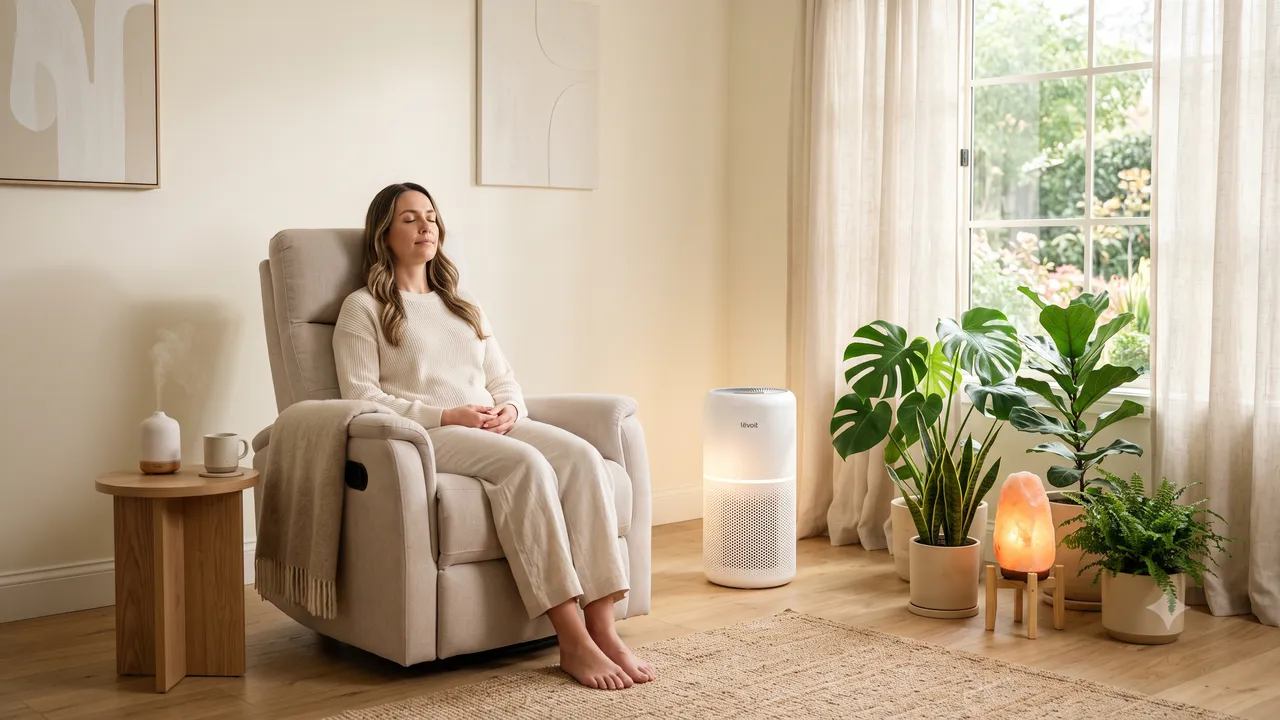
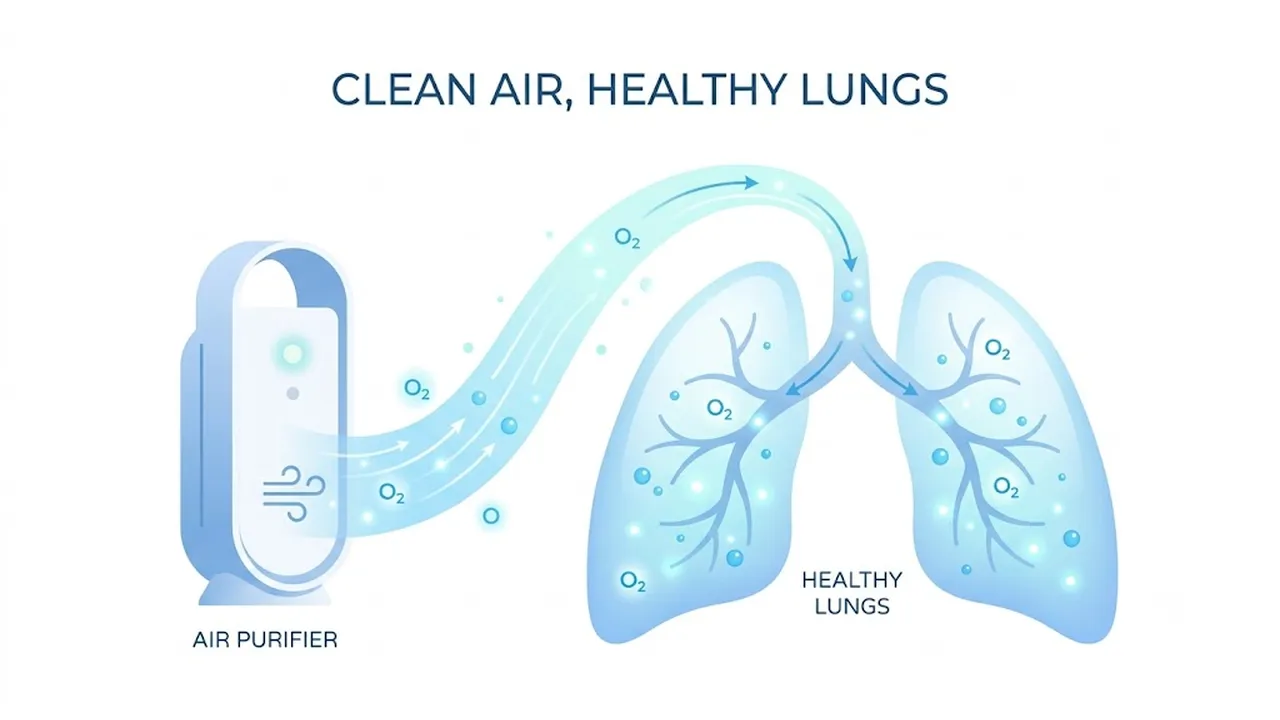
A properly sized HEPA air purifier in your main living area and bedroom can reduce exposure to all of these. It’s one of the simplest, most effective environmental interventions available, and unlike medication, it works 24/7 without side effects.
Doctor-Recommended Features for COPD Air Purifiers
Before diving into specific models, it’s worth understanding what pulmonologists and respiratory specialists actually look for in an air purifier for their COPD patients. Not every feature matters equally, here’s what counts most.
True HEPA Filtration (H13 or H14)
The single most important feature. A True HEPA filter captures 99.97% of particles at 0.3 microns, which includes dust, pollen, mold spores, pet dander, and most bacteria. Medical-grade H13 or H14 filters go a step further, capturing even smaller particles. This is non-negotiable for COPD patients, avoid any purifier that uses “HEPA-like,” “HEPA-type,” or “HEPA-style” marketing language, as these filters don’t meet the same standard.
Zero Ozone Emission
This is the safety line you cannot cross. Ozone is a powerful oxidant that damages lung tissue, and COPD patients are especially vulnerable to its effects. The EPA warns that even low-level ozone exposure can trigger coughing, throat irritation, and chest pain in people with existing respiratory conditions.
Avoid these technologies entirely:
- Ionic/ionizer air purifiers
- Electrostatic precipitators
- UV-C purifiers that aren’t properly sealed
- Any device marketed as “activated oxygen” or “super oxygen”
Look for CARB (California Air Resources Board) certification, which guarantees the purifier produces less than 0.050 parts per million of ozone, a safety threshold that applies to all models sold in California.
Low Noise on All Settings
COPD symptoms often worsen at night. Lying flat increases the work of breathing, and nighttime coughing is one of the most common complaints. An air purifier that’s too loud to run while sleeping is one you’ll turn off, defeating its entire purpose.
Target noise levels:
- Sleep mode: Under 30 dB (barely audible whisper)
- Low setting: Under 40 dB (library quiet)
- Medium setting: Under 50 dB (moderate conversation level)
High CADR for the Room Size
Clean Air Delivery Rate (CADR) measures how quickly a purifier removes smoke, dust, and pollen from the air. For COPD patients, higher CADR means faster removal of triggers. Match the purifier’s smoke CADR to your room size, the smoke rating is the most relevant for fine particles.
Rule of thumb: Smoke CADR should be at least 2/3 of your room’s square footage. For a 300 sq ft room, you want a smoke CADR of at least 200.
Activated Carbon for VOCs and Odors
A HEPA filter alone won’t remove gases, chemicals, or odors. Activated carbon adsorbs VOCs, formaldehyde, and other gaseous irritants that can trigger COPD symptoms. More carbon means longer filter life and better performance, cheap purifiers with a thin carbon sheet are basically decorative.
For more on selecting the right purifier for your needs, see our Air Purifier Buying Guide for First-Time Buyers.
Top 5 Air Purifiers for COPD in 2026: Comparison Table
| Feature | Blueair HealthProtect 7770i | IQAir HealthPro Plus | Coway Airmega 400 | Levoit Core 600S | Alen BreatheSmart 75i |
|---|---|---|---|---|---|
| Price | $699 | $899 | $449 | $269 | $449 |
| Filter Type | HEPASilent Ultra | HyperHEPA (H14) | True HEPA + Carbon | H13 True HEPA | H13 True HEPA |
| CADR (Smoke) | 270 | 300 | 350 | 280 | 290 |
| Room Coverage | 674 sq ft | 1,125 sq ft | 1,560 sq ft | 635 sq ft | 1,300 sq ft |
| Noise (Low) | 25 dB | 28 dB | 32 dB | 26 dB | 25 dB |
| Noise (High) | 49 dB | 54 dB | 56 dB | 55 dB | 49 dB |
| Ozone Certified | ✅ CARB | ✅ CARB | ✅ CARB | ✅ CARB | ✅ CARB |
| Carbon Filter | ✅ Built-in | ✅ 5 lbs | ✅ Deodorization | ✅ ARC Formula | ✅ Optional |
| Smart Sensors | ✅ PM2.5, VOC, CO₂ | ❌ | ✅ PM2.5 | ✅ PM2.5, VOC | ✅ PM2.5 |
| Auto Mode | ✅ | ❌ | ✅ | ✅ | ✅ |
| Warranty | 2 years | 10 years | 3 years | 2 years | Lifetime |
| Amazon Link | Buy on Amazon | Buy on Amazon | Buy on Amazon | Buy on Amazon | Buy on Amazon |
Detailed Reviews
1. Blueair HealthProtect 7770i, Best Overall for COPD
The Blueair HealthProtect 7770i is the purifier we’d put in our own home if we had COPD. It combines Blueair’s proprietary HEPASilent Ultra technology, an electrostatic + mechanical filtration hybrid, with intelligent sensors that monitor PM2.5, VOCs, CO₂, temperature, and humidity in real time. The GermShield technology keeps the air clean even in standby mode, running the fan at low speed to prevent particles from settling.
Why it’s great for COPD: The 7770i produces zero ozone (CARB certified), runs at just 25 dB on its lowest setting, and the auto mode adjusts fan speed based on real-time air quality data. The integrated carbon filter handles VOCs and household odors without a separate unit. The smartphone app lets you check air quality from bed, helpful when breathing is difficult and you don’t want to get up.
The trade-off: At $699, it’s not cheap. Replacement filters run about $80 every 6–12 months.
2. IQAir HealthPro Plus, Best Medical-Grade Filtration
The IQAir HealthPro Plus is what you’ll find in hospitals, medical offices, and the homes of people who take air quality seriously. Its HyperHEPA filter captures particles down to 0.003 microns, 100 times smaller than what standard HEPA catches. This includes ultrafine particles, viruses, and combustion byproducts that other purifiers miss entirely.
Why it’s great for COPD: Nothing filters finer. The five pounds of activated carbon handles chemicals, gases, and odors with authority. It’s CARB certified and uses no ionization or UV, just pure mechanical filtration. The 10-year warranty signals how confident IQAir is in the build quality.
The trade-off: At $899, it’s the most expensive option. There’s no auto mode or smart sensors, you set the fan speed manually. It’s also fairly large and industrial-looking.
If you’re interested in understanding more about how different filter technologies work, our HEPA vs. Carbon vs. UV: Which Filter Technology Works Best? article breaks it down.
3. Coway Airmega 400, Best for Large Rooms
The Coway Airmega 400 covers up to 1,560 square feet, making it the best choice if your COPD symptoms are triggered in a large open-plan living area. The dual-intake design pulls air from both sides, and the combined True HEPA + activated carbon filtration handles both particles and gases effectively.
Why it’s great for COPD: The Airmega 400’s smoke CADR of 350 is the highest on this list, it can clear a large room fast. Smart mode adjusts fan speed based on PM2.5 levels, and Eco mode turns the fan off when air quality is good for 10 minutes, saving energy. At 32 dB on the lowest setting, it’s quiet enough for most people to sleep through.
The trade-off: The higher noise ceiling on max (56 dB) may bother light sleepers. Replacement filters cost about $100 and need changing every 12 months.
4. Levoit Core 600S, Best Value
If you need a reliable air purifier for COPD without spending $500+, the Levoit Core 600S is the sweet spot. It uses an H13 True HEPA filter with an upgraded ARC (Adsorb, React, Clean) carbon formula that handles VOCs and odors better than most budget purifiers. The laser-based PM2.5 sensor and auto mode work accurately, and the 26 dB sleep mode is genuinely quiet.
Why it’s great for COPD: Excellent filtration at an affordable price. The 600S is CARB certified with zero ozone output. Smart features (app control, voice assistants, scheduling) are included at no extra cost. It covers up to 635 square feet with a respectable 280 smoke CADR.
The trade-off: The carbon filter is smaller than what you’ll find in pricier models, so it saturates faster if you have significant chemical or odor concerns. Filter replacement every 6–8 months at $35 each adds up.
For budget-conscious buyers, our Air Purifier Buying Mistakes to Avoid article covers the common pitfalls that waste money.
5. Alen BreatheSmart 75i, Best Long-Term Value
The Alen BreatheSmart 75i stands out with its lifetime warranty, if the motor or electronics fail at any point, Alen replaces it. The H13 True HEPA filter is available in multiple configurations (Pure, FreshPlus for VOCs, OdorCell for heavy odors), so you can swap the filter type based on your primary COPD triggers.
Why it’s great for COPD: The 25 dB sleep mode ties for the quietest on this list. The B7-FreshPlus filter option adds a substantial carbon layer for chemical sensitivity. SmartSensor auto-adjusts fan speed, and the 290 smoke CADR covers rooms up to 1,300 square feet. The customizable front panels let you match the purifier to your room decor.
The trade-off: At $449, you’re paying for the warranty and build quality, not cutting-edge smart features. The app is functional but less polished than Blueair or Levoit’s.
COPD-Specific Concerns: What to Watch Out For
Ozone: The Invisible Danger
This deserves its own section because it’s so important. Some air purifiers, particularly ionic, electrostatic, and some UV models, generate ozone as a byproduct. Ozone is a known lung irritant that causes inflammation, reduces lung function, and can trigger asthma attacks and COPD exacerbations.
The California Air Resources Board (CARB) maintains a list of certified electronic air cleaning devices. Every purifier on this list above is CARB certified, meaning they emit less than 0.050 ppm of ozone. But if you’re considering a model not on this list, always check CARB certification before buying.
As Dr. MeiLan Han, a pulmonologist at the University of Michigan and spokesperson for the American Lung Association, has noted: “Patients with COPD should avoid any device that generates ozone, even in small amounts. The risk to compromised airways simply isn’t worth it.”
Noise and Sleep Quality
COPD patients frequently experience worse symptoms at night. Nocturnal coughing, wheezing, and shortness of breath disrupt sleep, which in turn weakens the immune system and increases vulnerability to exacerbations. An air purifier running on its sleep setting should be genuinely quiet, under 30 dB.
If you’re particularly noise-sensitive, consider placing the purifier slightly farther from your bed (at least 6 feet) and running it on low instead of directly at the bedside. The Blueair and Alen models, at 25 dB, are practically silent at this range.
Filter Replacement Matters More with COPD
A saturated filter doesn’t just stop working, it can become a breeding ground for mold and bacteria, which get pushed back into the air. For COPD patients, this turns the purifier from a solution into a problem. Set calendar reminders for filter replacements and never extend beyond the manufacturer’s recommendation.
Some purifiers (Blueair, Coway, Levoit) have filter life indicators that alert you when replacement is due. IQAir and Alen use timer-based systems. Either way, stay on schedule.
For guidance on maintaining your air purifier, see our Air Purifier Maintenance Guide.
Placement for Maximum Benefit
Place your purifier in the room where you spend the most time, typically the bedroom or living room. Key placement tips:
- Keep it 3–5 feet from your bed for nighttime protection.
- Avoid corners and walls, leave at least 12 inches of clearance on all sides for proper airflow.
- Run it continuously on auto or low, air purifiers work best when maintaining clean air, not catching up after hours of buildup.
- Close windows when the purifier is running, or you’re just filtering outdoor air indefinitely.
If you have pets in the home, our Best Air Purifier for Pet Owners guide covers strategies for managing dander and allergens alongside COPD triggers.
How We Chose These Models
We evaluated over 30 air purifiers on the market in 2026, narrowing them down to the five models above based on these criteria:
- CARB certification, zero ozone, no exceptions.
- True HEPA filtration, H13 or H14 grade, verified by third-party testing.
- Noise performance, sleep mode under 30 dB.
- Activated carbon filtration, for VOC and odor removal.
- Room coverage and CADR, sufficient for real living spaces, not just “up to X sq ft” marketing claims.
- Ease of use, auto modes, air quality indicators, and simple filter replacement.
- Brand reliability, warranty, customer support, and filter availability over time.
We did not consider ionic purifiers, ozone generators, or any model without CARB certification, regardless of how well they performed in other areas.
Frequently Asked Questions
Can an air purifier cure or treat COPD?
No. An air purifier is not a medical treatment and cannot cure, reverse, or treat COPD. What it can do is reduce your exposure to airborne triggers, dust, mold, VOCs, smoke, and allergens, that worsen symptoms and increase the risk of exacerbations. Think of it as one tool in a broader COPD management plan that includes medication, pulmonary rehabilitation, and lifestyle changes. Always follow your doctor’s treatment plan.
What type of filter is best for COPD patients?
A True HEPA filter (H13 or H14 grade) combined with an activated carbon filter is the best combination for COPD. The HEPA component captures particulate matter (dust, pollen, mold, bacteria), while the carbon component adsorbs gases and VOCs. Avoid ionic or electrostatic filters, as these can produce ozone. If you can only choose one, prioritize HEPA, particles are the most common COPD triggers.
How close should the air purifier be to my bed?
Three to five feet from your head is the sweet spot. This distance allows the purifier’s airflow to reach your breathing zone without creating drafts or excessive noise. If the purifier is too close, the direct airflow can dry out your airways and cause irritation. If it’s too far, you’re not getting the full benefit of clean air while sleeping.
Do I need an air purifier if I already have a central HVAC filter?
Most residential HVAC systems use MERV 8–11 filters, which capture large particles but miss the fine particulate matter (PM2.5) that most affects COPD. A standalone HEPA air purifier in your bedroom or living room adds a critical layer of filtration that your HVAC system can’t provide. If you want to upgrade your HVAC filter, MERV 13 is the minimum recommendation, but even then, a dedicated HEPA purifier in your main living space is still worthwhile.
How often should I replace the filters if I have COPD?
Follow the manufacturer’s timeline, but be conservative. If you live in a high-pollution area, have pets, or run the purifier 24/7 (which you should), filters may need replacing sooner than the stated lifespan. Most HEPA filters last 6–12 months; carbon filters last 3–6 months. Check the filter indicator monthly and inspect the filter visually, if it looks gray or darkened, replace it regardless of the timeline. A saturated filter can release trapped particles and harbor mold, which is dangerous for COPD patients. For more on filter care, read our complete maintenance guide.
Final Verdict
For most COPD patients, the Blueair HealthProtect 7770i offers the best combination of filtration, smart features, and quiet operation. If budget isn’t a concern and you want absolute best-in-class filtration, the IQAir HealthPro Plus is the medical-grade choice. For large open spaces, the Coway Airmega 400 delivers the highest airflow. And if you want excellent performance at a reasonable price, the Levoit Core 600S punches well above its weight.
Whichever model you choose, the most important step is getting a quality HEPA air purifier running in your home. For someone living with COPD, cleaner indoor air isn’t a luxury, it’s a medical necessity.
Disclaimer: This article is for informational purposes only and does not constitute medical advice. Always consult your pulmonologist or healthcare provider before making changes to your COPD management plan. Air purifiers are a supplement to, not a replacement for, prescribed medical treatment.
Affiliate Disclosure: The Air Purifier Guide is a participant in the Amazon Services LLC Associates Program, an affiliate advertising program designed to provide a means for sites to earn advertising fees by advertising and linking to Amazon.com. If you purchase through our links, we may earn a commission at no additional cost to you. This helps us keep our content free and independently researched.
You May Also Like
- Best Air Purifier for COPD and Chronic Respiratory Conditions: What Pulmonologists Recommend
- Best Air Purifier for Elderly and Seniors: Respiratory Health in Later Life
- Air Purifier and Sleep Quality: The Science Behind Cleaner Air and Better Rest
- Air Purifier for Homes Near Highways: Reducing Traffic-Related PM2.5 and NO2 Indoors
Support This Guide
Helpful? Add The Air Purifier Guide as a preferred source on Google so our guides show up in your search results.
Related Articles

Coway Mighty2 vs AP-1512HH (2026)
Coway's Mighty2 replaced the AP-1512HH as Wirecutter's top pick. We compare CADR, noise, sensors, filter costs, and whether the older unit is still the smarter buy.

KNKA APH4000 Review: $150 Dark Horse
KNKA's APH4000 is one of Amazon's best-selling purifiers at $150. We check the AHAM certification, decode the 1,695 sq ft claim, and compare it to Levoit and Coway.

Levoit Core 300 vs 300-P: What Changed
Levoit quietly replaced the Core 300 with the Core 300-P. We explain the AHAM certification, whether filters still fit, and which one you should actually buy.

Shark NeverChange HP302 Review
Shark's NeverChange HP302 promises 5 years on one filter. We dig into the real running costs, the odor neutralizer catch, and whether it beats cheaper rivals.

Winix 5510 vs 5500-2: 2026 Verdict
The Winix 5500-2 is discontinued and the 5510 takes over. We compare CADR, noise, filter costs, and the one compatibility problem nobody mentions.
🛒 Products Mentioned
As an Amazon Associate, we earn from qualifying purchases.
Covers indoor air quality science, respiratory health, allergy management, and wildfire smoke protection.
View all articles by Sarah →