The Short Answer: Place purifiers 3-5 feet from your breathing zone, near pollution sources, with unobstructed airflow. Avoid corners and curtains. For bedrooms, position near the bed but not blowing directly on you.
Editor’s note (September 2026): The Winix 5500-2 has been discontinued and remaining stock is limited. Winix’s official successor is the Winix 5510, which adds app control and uses a new filter. Read our Winix 5510 vs 5500-2 comparison before you buy either one.
Your Levoit Core 400S air purifier works hard every day to keep the air in your home clean and breathable. But over time, the filter inside accumulates dust, allergens, pet dander, and other airborne particles, and eventually it needs to be replaced. Choosing the right replacement filter is essential to maintaining the performance your air purifier was designed to deliver.
In this guide, we cover everything you need to know about replacement filters for the Levoit Core 400S, including OEM versus third-party options, pricing, how to swap the filter, and answers to the most commonly asked questions. If you are also shopping for a new unit, check out our best air purifiers for large rooms roundup for additional recommendations.
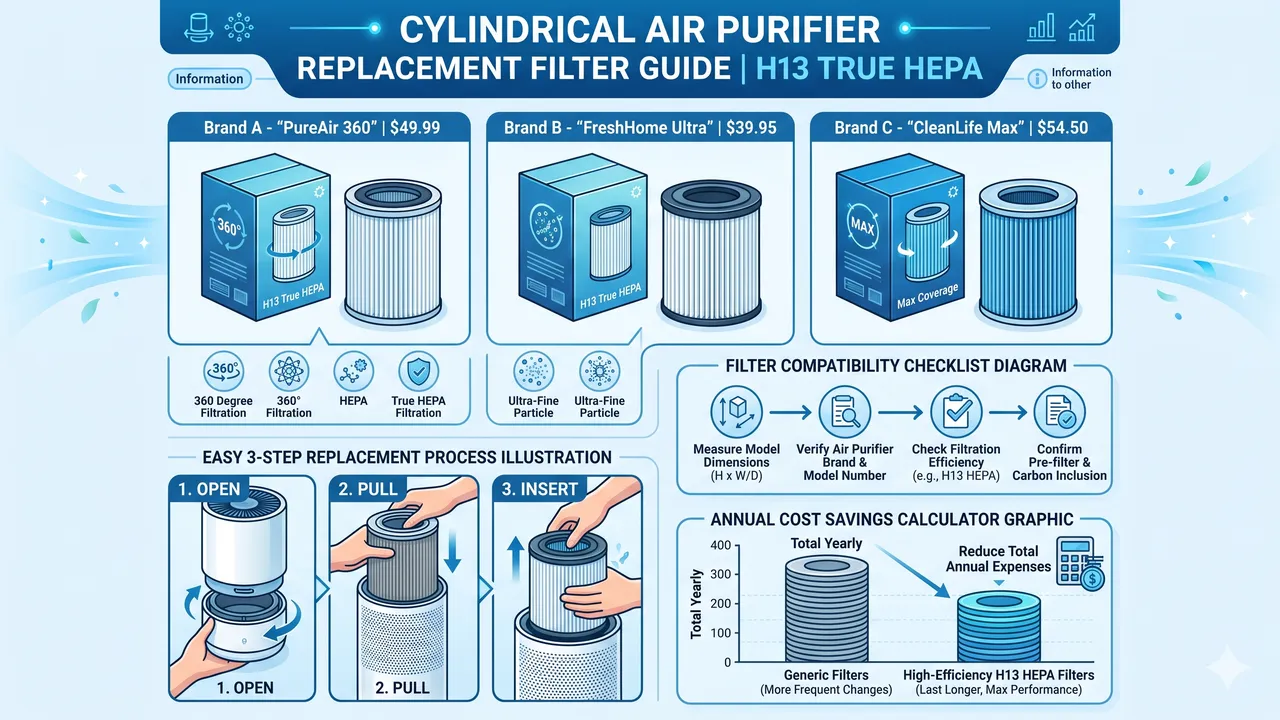
Understanding the Levoit Core 400S Filter System
The Levoit Core 400S uses a three-stage filtration system that works together to capture particles of all sizes:
- Pre-filter, The outer nylon mesh catches large particles like hair, lint, and dust. This layer is washable and reusable, extending the life of the inner filters.
- True HEPA filter (H13 grade), This is the heart of the system. The H13 HEPA filter captures 99.97% of airborne particles as small as 0.3 microns, including pollen, mold spores, fine dust, and bacteria.
- Activated carbon filter, A pelletized carbon layer absorbs household odors, cooking smells, volatile organic compounds (VOCs), and light smoke.
All three layers are combined into a single cylindrical 3-in-1 replacement cartridge that slides into the bottom of the unit. This integrated design makes replacement simple, you swap the entire cartridge at once rather than replacing individual layers.
The Core 400S covers rooms up to 403 square feet and delivers a CADR (Clean Air Delivery Rate) of 260 CFM on its highest setting. To keep those numbers where they should be, Levoit recommends replacing the filter every 6 to 8 months depending on usage, air quality, and whether you have pets.
OEM Replacement Filters: What Levoit Offers
Levoit sells its own branded replacement filter designed specifically for the Core 400S. The official part number is Core 400S-RF (sometimes listed as VortexAir 3.0 replacement filter). Here is what you get:
- H13 True HEPA layer with the same specifications as the original filter
- Pelletized activated carbon for odor and VOC absorption
- Pre-filter mesh integrated into the cartridge
- Exact fit guaranteed, no trimming, no guessing
The OEM filter typically retails between $35 and $45 for a single unit. Levoit occasionally sells two-packs at a slight discount, which brings the per-filter cost down to around $30–$35.
Pros of going OEM:
- Guaranteed compatibility with the Core 400S housing
- Filter replacement indicator on the purifier resets correctly every time
- Same performance you experienced out of the box
- Covered by Levoit’s customer support if anything goes wrong
Cons of going OEM:
- Higher price compared to third-party alternatives
- Only available through Levoit’s website, Amazon, and select retailers
If you want a direct link, you can check the current price of the Levoit Core 400S replacement filter on Amazon.
Third-Party Replacement Filters: Budget-Friendly Alternatives
Several third-party manufacturers produce compatible replacement filters for the Levoit Core 400S. These aftermarket options use the same 3-in-1 cylindrical design and claim to match OEM filtration performance at a lower price point. Popular third-party brands include:
- LFSQT, Frequently one of the top-selling aftermarket options on Amazon
- Xingxuan, Another widely available alternative with strong reviews
- VEVA, Known for producing filters across multiple air purifier brands
- Himox, Offers both standard and enhanced carbon options
Third-party filters generally cost between $18 and $30, representing a savings of 30% to 50% compared to the OEM filter.
OEM vs. Third-Party Filter Comparison
| Feature | OEM (Levoit Core 400S-RF) | Third-Party (Average) |
|---|---|---|
| Price (single) | $35–$45 | $18–$30 |
| Price (two-pack) | $60–$70 | $30–$48 |
| HEPA Grade | H13 True HEPA | H13 True HEPA (claimed) |
| Carbon Type | Pelletized activated carbon | Pelletized or fibrous carbon |
| Pre-filter | Integrated nylon mesh | Integrated nylon mesh |
| Filter Life | 6–8 months | 4–7 months (varies) |
| Fit Guarantee | Perfect OEM fit | Generally good; occasional tight/loose fit reported |
| Filter Reset | Always works | Usually works; occasional reset issues reported |
| Warranty/Support | Levoit customer support | Varies by seller |
| Independent Testing | Verified H13 performance | Rarely independently tested |
Key Differences to Consider
Filtration accuracy: OEM filters are manufactured to Levoit’s exact specifications. While many third-party filters claim H13 HEPA certification, independent verification is uncommon. If you suffer from severe allergies or asthma, the OEM filter provides more confidence in its performance claims.
Carbon quality: This is where differences are most noticeable. OEM filters use pelletized activated carbon, which has a large surface area for absorbing odors and chemicals. Some cheaper third-party filters use a thin carbon-impregnated fabric sheet instead, which is less effective at trapping odors and has a shorter useful life. When evaluating third-party options, look for the word “pelletized” or “pellet” in the product description.
Build quality and fit: Most third-party filters fit the Core 400S housing well, but occasional reports mention slightly loose or overly tight fits. A loose filter can allow unfiltered air to bypass the cartridge, reducing overall effectiveness. Always check recent user reviews for fit issues before purchasing a new brand.
Filter life: Third-party filters sometimes have a shorter usable lifespan, particularly those with thinner carbon layers. If a third-party filter lasts only 4–5 months versus 7–8 months for the OEM, the cost savings shrink considerably.
For a deeper dive into filtration technology, see our guide on HEPA vs. activated carbon filters.
Cost Comparison: Annual Filter Expenses
Let us break down the real-world cost of keeping your Levoit Core 400S running over a full year, assuming filter replacement every 6 months (two filters per year):
| Scenario | Per-Filter Cost | Annual Cost (2 Filters) | Annual Savings vs. OEM |
|---|---|---|---|
| OEM single | ~$40 | ~$80 | , |
| OEM two-pack | ~$33 | ~$66 | ~$14 |
| Third-party (quality) | ~$25 | ~$50 | ~$30 |
| Third-party (budget) | ~$19 | ~$38 | ~$42 |
Over a three-year period, roughly the typical lifespan of the Core 400S unit itself, you are looking at:
- OEM path: $198–$240 in filters
- Third-party path: $114–$150 in filters
That is a potential savings of $90 to $126 over the life of the purifier. However, remember that these savings only make sense if the third-party filter delivers comparable air cleaning performance. A filter that does not trap particles effectively is not a bargain at any price.
Step-by-Step Filter Replacement Guide
Replacing the filter in your Levoit Core 400S takes less than five minutes. No tools are required.
What You Need
- One replacement filter (OEM or third-party)
- A vacuum cleaner or soft cloth (optional, for cleaning the pre-filter area)
Instructions
Step 1: Turn off and unplug the unit. Always disconnect the air purifier from power before performing any maintenance. Press the power button to ensure the unit is fully off, then unplug the power cord from the wall outlet.
Step 2: Remove the top cover. The Core 400S has a top-outflow design. Grip the top panel and lift it straight up. It should come off easily without excessive force. Set the cover aside on a clean surface.
Step 3: Remove the old filter. You will see the cylindrical filter cartridge sitting inside the body of the purifier. Grasp the center handle or pull tab on top of the filter and lift it straight up and out of the housing. Place the old filter in a plastic bag immediately to prevent trapped particles from escaping back into your home.
Step 4: Clean the interior (optional but recommended). Use a vacuum with a brush attachment or a slightly damp cloth to wipe away any dust that has accumulated inside the filter chamber. This takes 30 seconds and helps the new filter seat properly.
Step 5: Unwrap and install the new filter. Remove all packaging from the new filter, including any plastic wrap and cardboard inserts. Slide the new filter into the housing with the pull tab or handle facing up. It should sit flush and level inside the unit. Make sure it is oriented correctly, it only fits one way.
Step 6: Replace the top cover. Set the top cover back onto the unit, aligning it with the base. Press down gently until it clicks or sits firmly in place.
Step 7: Reset the filter indicator. Plug the unit back in and turn it on. To reset the filter replacement indicator, press and hold the Check Filter button (the small button with a filter icon) for approximately 3 to 5 seconds until the indicator light turns off. This tells the purifier that a fresh filter has been installed and starts the countdown timer for the next replacement.
Step 8: Dispose of the old filter responsibly. The old filter contains trapped particles and allergens. Seal it in a plastic bag before placing it in the trash. The cardboard and plastic components of the filter cartridge can be recycled where facilities exist.
For more maintenance tips, check out our complete air purifier maintenance guide.
Tips to Extend Your Filter’s Life
Replacing filters on schedule is important, but you can also take steps to maximize the lifespan of each filter:
- Vacuum the pre-filter regularly. Every two to four weeks, remove the filter and vacuum the outer pre-filter mesh. This removes surface dust and hair before it clogs the inner HEPA layer.
- Run the purifier on a lower speed when possible. Lower fan speeds pull less air through the filter per hour, reducing particle loading. Use the Auto mode, which adjusts speed based on real-time air quality readings.
- Keep doors and windows closed. An air purifier working against open windows has to process far more air, wearing out the filter faster.
- Address pollution sources directly. If you are cooking, use the range hood. If you are sanding or painting, ventilate the area separately rather than relying solely on the purifier.
- Monitor the filter indicator. The Core 400S tracks filter usage automatically. When the indicator turns red, start planning your replacement, do not wait weeks after the alert.
Frequently Asked Questions
How often should I replace the Levoit Core 400S filter?
Levoit recommends replacing the filter every 6 to 8 months under normal conditions. If you run the purifier 24/7, have pets, live in an area with poor outdoor air quality, or use the purifier in a kitchen, you may need to replace it closer to the 6-month mark. In lighter-use scenarios, a bedroom used only at night, for example, the filter may last up to 8 or even 9 months.
Can I wash and reuse the Levoit Core 400S filter?
No. The HEPA and activated carbon layers are not washable. Washing a HEPA filter damages the delicate fiber structure and destroys its particle-capture ability. The outer pre-filter mesh can be vacuumed or gently wiped with a damp cloth, but the entire cartridge must be replaced when the filter reaches the end of its life. Attempting to wash and reuse the full cartridge will result in significantly reduced air purification performance.
Are third-party filters safe to use in the Levoit Core 400S?
Most reputable third-party filters are safe and will not damage your air purifier. The main concern is filtration performance rather than safety. Some third-party filters may not capture particles as efficiently as the OEM H13 HEPA filter, particularly very fine particles in the 0.1 to 0.3 micron range. If you have respiratory conditions or severe allergies, sticking with the OEM filter is the safer choice. For general household use, quality third-party filters from well-reviewed brands are generally a reasonable option.
Will using a third-party filter void my Levoit warranty?
Using a third-party replacement filter does not void the warranty on the Levoit Core 400S unit itself. Levoit’s warranty covers defects in the air purifier’s motor, electronics, and housing, not the consumable filter. However, if a defective third-party filter causes damage to the unit (extremely rare but theoretically possible), that specific damage might not be covered. Always buy third-party filters from sellers with good return policies.
Why does my new filter have a slight odor when I first install it?
It is normal for a new filter, both OEM and third-party, to emit a faint smell during the first few hours of operation. This is typically caused by the activated carbon and the packaging materials. The odor usually dissipates within 2 to 12 hours of continuous operation. If the smell is strong, chemical, or persists beyond 24 hours, remove the filter and contact the manufacturer for a replacement. Running the purifier on high speed in a well-ventilated room will help clear the initial smell faster.
Final Verdict: Which Filter Should You Buy?
Here is our recommendation based on different priorities:
Best overall: OEM Levoit Core 400S-RF. If you want guaranteed performance, a perfect fit, and peace of mind, the official filter is the way to go. It costs more, but you get exactly what Levoit engineered the purifier to work with. Check price on Amazon.
Best budget option: Reputable third-party filter with pelletized carbon. If you want to save 30–50% and are willing to research reviews carefully, a quality third-party filter can serve you well. Look for brands with high ratings (4+ stars with hundreds of reviews), explicit H13 HEPA claims, and pelletized carbon, not just carbon-impregnated fabric. Browse third-party options on Amazon.
Best value over time: OEM two-pack. If you plan to keep the Core 400S for several years, buying the OEM two-pack whenever it goes on sale strikes the best balance between cost and guaranteed quality.
Regardless of which filter you choose, replacing it on schedule is the single most important thing you can do to keep your air purifier running effectively. A fresh filter means cleaner air, fewer allergens, and better respiratory health for everyone in your home.
Affiliate Disclosure: This article contains affiliate links. If you make a purchase through these links, The Air Purifier Guide may earn a small commission at no additional cost to you. This helps support our work in providing honest, research-based air quality content. We only recommend products we have genuinely evaluated and believe in.
You May Also Like
Support This Guide
Helpful? Add The Air Purifier Guide as a preferred source on Google so our guides show up in your search results.
Related Articles

Coway Mighty2 vs AP-1512HH (2026)
Coway's Mighty2 replaced the AP-1512HH as Wirecutter's top pick. We compare CADR, noise, sensors, filter costs, and whether the older unit is still the smarter buy.

KNKA APH4000 Review: $150 Dark Horse
KNKA's APH4000 is one of Amazon's best-selling purifiers at $150. We check the AHAM certification, decode the 1,695 sq ft claim, and compare it to Levoit and Coway.

Levoit Core 300 vs 300-P: What Changed
Levoit quietly replaced the Core 300 with the Core 300-P. We explain the AHAM certification, whether filters still fit, and which one you should actually buy.

Shark NeverChange HP302 Review
Shark's NeverChange HP302 promises 5 years on one filter. We dig into the real running costs, the odor neutralizer catch, and whether it beats cheaper rivals.

Winix 5510 vs 5500-2: 2026 Verdict
The Winix 5500-2 is discontinued and the 5510 takes over. We compare CADR, noise, filter costs, and the one compatibility problem nobody mentions.
🛒 Products Mentioned
As an Amazon Associate, we earn from qualifying purchases.
Runs side-by-side purifier comparisons, long-term ownership reports, and filter cost analysis.
View all articles by David →