Quick Answer: A dehumidifier is more important than an air purifier for mold prevention. Keep humidity below 50% and mold cannot germinate. Use a Frigidaire 50-pint dehumidifier ($249) plus a Winix 5500-2 ($159) for the best combination. The dehumidifier prevents growth, the purifier captures airborne spores. Together, they cost less than a single mold remediation visit.
Editor’s note (September 2026): The Winix 5500-2 has been discontinued and remaining stock is limited. Winix’s official successor is the Winix 5510, which adds app control and uses a new filter. Read our Winix 5510 vs 5500-2 comparison before you buy either one.
The Uncomfortable Truth About “Mold-Killing” Air Purifiers
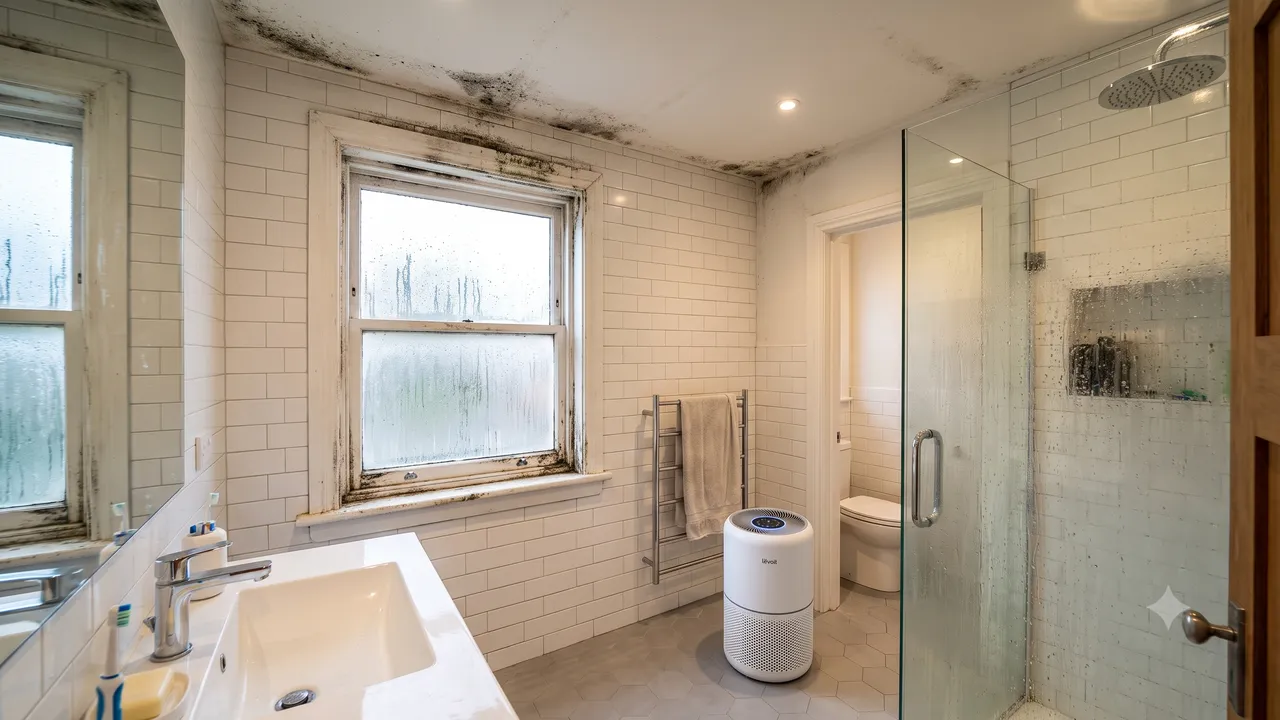
If you search for “air purifier for mold,” you’ll find dozens of products claiming to solve mold problems. Some even use the phrase “kills mold” in their marketing. Here’s the uncomfortable truth I’ve learned after dealing with a mold issue in my own basement in 2023: an air purifier, by itself, cannot fix a mold problem. It can help significantly. But only as part of a strategy that addresses the root cause.
I spent three months and roughly $800 learning this lesson the hard way. I bought an expensive purifier with UV-C and a HEPA filter, ran it in my damp basement, and watched the mold keep growing on the joists above my head. The purifier was working perfectly, it was capturing spores. But the moisture that feeds mold was untouched. It wasn’t until I added a dehumidifier and brought the relative humidity from 68% down to 42% that the mold stopped spreading.
This article explains the science behind why humidity control is the foundation of mold prevention, where air purifiers fit in the strategy, and exactly how to set up both together. I’ll reference data from the EPA’s Mold Guide, the CDC’s mold and health resources, and peer-reviewed research on indoor humidity and microbial growth.
The Mold Triangle: Why Spores Alone Aren’t the Problem
Mold needs three things to grow. Understanding this triangle is the key to effective prevention:
-
Spores — Always present in indoor and outdoor air. The average home contains 200-500 mold spores per cubic meter of air, even in clean environments. You cannot eliminate them, and you don’t need to. Spores are the seed, not the problem.
-
Food source — Any organic material: drywall paper, wood, carpet fibers, ceiling tiles, dust. Present in every home. You can’t remove all food sources without gutting your house to the studs.
-
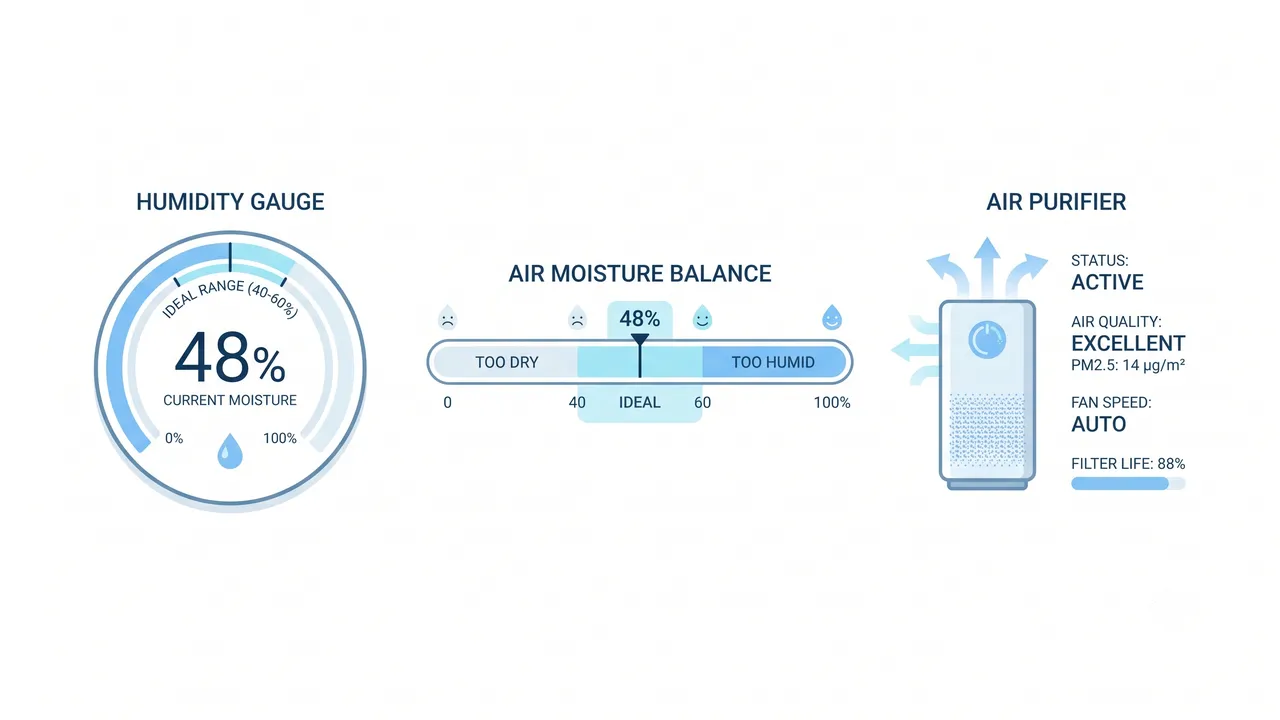
Moisture — The only factor you can realistically control. Mold requires a relative humidity (RH) above 60% to begin germinating on surfaces, and grows rapidly above 70%. According to the EPA’s guidance on mold, keeping indoor RH below 50% prevents mold growth regardless of how many spores are present.
That’s the entire strategy in one sentence: control moisture, and mold cannot grow.
A HEPA air purifier captures airborne spores, reducing spore counts by 50-80% in a closed room according to studies published in the Journal of Allergy and Clinical Immunology. This is valuable, it reduces the spore load you breathe and limits colonization of new surfaces. But if the humidity stays above 60%, those captured spores are replaced by new growth within days.
What Happens at Each Humidity Level
The relationship between humidity and mold isn’t binary. Here’s what happens at each threshold, based on research from ASHRAE Standard 55 and the EPA’s indoor air quality guidance:
| Relative Humidity | What Happens | Risk Level |
|---|---|---|
| 30% or below | Air feels dry, skin irritation, static electricity. Dust mites inactive but comfort suffers. | Low mold risk, comfort issues |
| 30-45% | Ideal comfort zone. Dust mites cannot reproduce below 45% RH. Mold cannot grow. | Optimal range |
| 45-50% | Acceptable. Dust mites begin reproducing. Mold still cannot germinate on most surfaces. | Low risk |
| 50-60% | Mold can begin germinating on chronically damp surfaces (window frames, bathroom walls). Dust mite populations grow rapidly. | Moderate risk |
| 60-70% | Active mold growth on organic surfaces. Musty odors likely. Allergen levels rising significantly. | High risk |
| 70%+ | Rapid mold colonization. Structural damage possible. Health effects: respiratory symptoms, allergic reactions, and in severe cases, mycotoxin exposure. | Critical risk |
The CDC reports that indoor mold exposure can cause nasal stuffiness, throat irritation, coughing, eye irritation, and skin reactions in sensitive individuals. For people with asthma or mold allergies, exposure at the 60%+ RH levels can trigger severe episodes.
Measuring Your Humidity: Don’t Guess
You cannot manage what you don’t measure. A basic digital hygrometer costs $10-15 and gives you real-time humidity readings. I recommend the ThermoPro TP50, it’s cheap, accurate to within 2-3% RH, and has a memory function that shows the highest and lowest readings since you last reset it.
Where to measure:
- Basement: Place the hygrometer at chest height in the center of the room, away from walls and the dehumidifier
- Bathroom: Measure 30 minutes after a shower, this is your peak humidity
- Bedroom: Measure at night with the door closed, humidity rises from breathing
- Crawl space: If you have one, this is often the worst offender. Use a hygrometer with a remote sensor
When to measure:
- During humid months (May-September in most of the U.S.)
- After cooking, showering, or running the clothes dryer
- During and after rain events
- In winter when humidifiers are running or when windows are closed
A 2024 study from the Lawrence Berkeley National Laboratory found that 45% of U.S. homes have at least one room that exceeds 60% RH during summer months. Basements and bathrooms are the most common problem areas, but bedrooms with closed doors and no ventilation can also spike, especially with two people sleeping (we exhale roughly 200 mL of moisture per person per night).
Where Air Purifiers Actually Help With Mold
Now that we’ve established humidity control as the foundation, here’s where air purifiers earn their place in the strategy:
1. Capturing spores during and after cleaning. When you clean visible mold, you disturb millions of spores. Running a HEPA purifier in the room during and for 24 hours after cleaning captures these spores before they settle elsewhere. The EPA recommends using a HEPA vacuum and air filtration during mold cleanup.
2. Reducing daily spore exposure. Even with humidity controlled, outdoor spores enter through windows, doors, and HVAC systems. A HEPA purifier reduces the ambient spore load by 50-80%, which matters for people with mold allergies or respiratory conditions.
3. Preventing colonization of new surfaces. Fewer airborne spores means fewer landing on vulnerable surfaces. Combined with humidity control, this creates a hostile environment for mold: no moisture to germinate and fewer spores arriving.
4. Removing musty odors. Activated carbon filters adsorb the volatile organic compounds (MVOCs) that cause the musty “mold smell.” This is useful even after remediation, when lingering odors persist for weeks.
Choosing the Right Air Purifier for Mold
Not all air purifiers are equally effective for mold spore capture. Here’s what matters:
| Feature | What to Look For | Why It Matters |
|---|---|---|
| HEPA grade | True HEPA (H13 or H14) | Captures 99.97%+ of spores at 0.3 microns. Avoid “HEPA-type” filters, which may only capture 85-90%. |
| CADR (Smoke) | Minimum 150 CFM for a 300 sq ft room | Spores are similar in size to smoke particles (1-10 microns). A higher CADR means more air changes per hour. |
| Activated carbon | Granular or pelletized, not a thin sheet | Carbon adsorbs MVOCs (musty odors). A thin carbon sheet does almost nothing. |
| Seal quality | Tight filter housing, no air bypass | If air leaks around the filter, spores pass through unfiltered. Coway and Winix seal well; some budget models don’t. |
| Pre-filter | Washable, reusable | Captures large particles (hair, dust) before they clog the HEPA filter, extending its life. |
My recommendation: the Winix 5500-2 ($159) for mold situations. It has a True HEPA filter, a washable carbon pre-filter, and a pelletized activated carbon filter that’s significantly heavier than competitors’ carbon sheets. The 232 CFM smoke CADR handles rooms up to 360 sq ft at 4.8 ACH. Use our CADR calculator to verify it works for your room.
The Complete Mold Prevention Setup
Here’s the exact setup I use and recommend, based on my basement mold experience and two years of maintaining healthy humidity levels:
Dehumidifier Sizing
Not all dehumidifiers are created equal, and placement matters enormously.
| Room Size | Moderately Damp | Very Damp/Wet | Has Standing Water? |
|---|---|---|---|
| 500 sq ft | 30-pint | 50-pint | Call a professional |
| 1,000 sq ft | 50-pint | 50-70-pint | Call a professional |
| 1,500+ sq ft | 50-pint x2 | 70-pint x2 | Seriously, call someone |
Use our room size calculator to determine the right dehumidifier capacity for your space. The “pint” rating refers to how many pints of water the unit can remove from the air in 24 hours under test conditions. Real-world performance varies with temperature and initial humidity.
Placement Strategy
Dehumidifier: In the dampest corner of the room. Near the moisture source. In my basement, I placed it 3 feet from the wall that was showing condensation. This positioning targets the highest-humidity air first.
Air purifier: Centrally located, at least 8 feet from the dehumidifier. You don’t want the purifier sucking in the warm, dry exhaust air from the dehumidifier, it gives the sensor false “clean” readings and reduces the purifier’s ability to capture spores from the rest of the room. They should operate independently on different sides of the room.
Read our placement guide for more detailed positioning tips.
The Condensate Problem
A 50-pint dehumidifier in a damp basement will fill its 16-pint bucket in 8-10 hours. You have two options:
-
Manual emptying: Tedious and easy to forget. If you miss a day, the bucket fills and the unit shuts off. In a mold-prone basement, 12 hours without dehumidification can push humidity back above 60%.
-
Continuous drainage: Most 50-pint units have a built-in hose connection. A $15 garden hose connected to a floor drain solves this permanently. Set it and forget it. This is what I did, and it eliminated the single biggest failure point in my setup.
Operating Costs: The Full Picture
Running a dehumidifier and purifier 24/7 uses significant electricity, but it’s cheap insurance compared to mold remediation:
| Equipment | Watts (Typical) | Monthly Cost | Annual Cost (6 months) |
|---|---|---|---|
| Dehumidifier (50-pint) | 500-700W | $50-70 | $300-420 |
| Air purifier (Winix 5500-2) | 40W (medium) | $4.00 | $24 |
| Hygrometer | <1W | $0.10 | $0.60 |
| Total | $54-74 | $325-445 |
Based on average US electricity rate of $0.163/kWh (EIA, 2025)
You typically only need to run the dehumidifier during humid months (May-September in most regions, year-round in the Southeast and Gulf Coast). Calculate your exact costs using our electricity cost calculator.
Compare that to mold remediation costs:
| Mold Situation | Professional Remediation Cost |
|---|---|
| Small bathroom mold (<10 sq ft) | $500-1,500 |
| Basement mold (moderate) | $2,000-6,000 |
| Whole-house mold from chronic water damage | $10,000-30,000+ |
| Attic mold with structural damage | $5,000-15,000 |
Source: EPA Mold Guide, HomeAdvisor 2025 cost data
The math is straightforward: a dehumidifier and purifier running for 5 years costs roughly $1,600-2,200. A single mold remediation can cost more than that, and without humidity control, the mold often returns within months.
When a Purifier Alone Is Actually Enough
Short answer: almost never for active mold prevention. But there’s one specific scenario where it works:
If you’ve had a one-time mold incident that’s been professionally remediated, the moisture source has been fixed (leak repaired, ventilation improved), and humidity is now consistently under 50%, then running a HEPA purifier to capture residual airborne spores during the 2-4 week settling period after remediation is reasonable and effective.
For ongoing mold prevention in a humid basement, bathroom, or crawl space? No. You need the moisture control. Anyone selling you a “mold-killing air purifier” without discussing humidity is either ignorant of the science or hoping you are.
UV-C and “Mold-Killing” Claims: What the Research Says
Several air purifiers on the market use UV-C light and claim to “kill” mold spores. The EPA’s position on UV-C air purifiers is nuanced: UV-C can inactivate some microorganisms, but effectiveness depends on exposure time, light intensity, and distance from the source.
The practical problem: in a typical air purifier, air moves through the UV chamber in 0.1-0.3 seconds. Most residential UV-C systems don’t have enough intensity to inactivate mold spores in that timeframe. Studies published in Photochemistry and Photobiology show that effective UV-C inactivation of common mold species (Aspergillus, Cladosporium, Penicillium) requires exposure times of 1-10 seconds at intensities far higher than most residential purifiers provide.
HEPA filtration is more reliable. A True HEPA filter physically traps 99.97% of spores regardless of species, exposure time, or light intensity. Don’t pay a premium for UV-C in a mold situation. Spend that money on a better dehumidifier instead.
Humidity Monitoring Tips for Long-Term Success
After two years of maintaining my basement at 40-45% RH, here’s what I’ve learned:
- Buy a hygrometer ($10-15). Don’t guess at humidity levels. The ThermoPro TP50 is cheap and accurate. I have three: one in the basement, one in the bedroom, one in the bathroom.
- Check humidity daily during humid months. Summer humidity often exceeds 60% without air conditioning. A single day above 65% can start germination on pre-existing spore deposits.
- Monitor problem areas specifically. Basements, bathrooms, kitchens, and laundry rooms are the most humid rooms. Crawl spaces are often the worst and most overlooked.
- Set up smart alerts. Some smart hygrometers (Govee, SensorPush) send phone notifications when humidity exceeds a threshold you set. I set mine at 50%, and it’s alerted me three times in two years to dehumidifier issues I wouldn’t have noticed otherwise.
- Calibrate annually. Hygrometers can drift over time. The salt test method (saturated salt solution in a sealed bag produces 75% RH) takes 6 hours and costs nothing. Compare your hygrometer’s reading to 75% and adjust.
You May Also Like
- Air Purifier and Humidity Interaction Guide
- Best Air Purifier for Basements and Mold Prevention
- Air Purifier vs Humidifier vs Dehumidifier
- Best Air Purifier for Mold 2026
Frequently Asked Questions
Can I run an air purifier in a damp basement without a dehumidifier?
You can, but it won’t solve the mold problem. The purifier will capture airborne spores, reducing what you breathe, but mold will continue growing on surfaces as long as humidity stays above 50%. In a chronically damp basement, the HEPA filter will also clog faster because mold can grow on the filter media itself when humidity is high. Always pair an air purifier with a dehumidifier in damp spaces.
How quickly does mold grow once humidity exceeds 60%?
According to the EPA, mold can begin germinating on organic surfaces within 24-48 hours when conditions are favorable (humidity above 60%, temperature 60-80°F). Visible growth can appear within 7-14 days. This is why rapid humidity control matters, even a few days of high humidity can start a colony that takes weeks to remediate.
Do HEPA filters get moldy themselves?
Yes, HEPA filters in high-humidity environments can develop mold growth on the filter media. This is why filter replacement intervals should be shortened in damp environments. If your purifier runs in a room above 50% RH, check the filter monthly and replace it at the first sign of discoloration or musty smell. Some purifiers, like the Winix 5500-2, have a washable pre-filter that protects the main HEPA filter from moisture exposure.
Is ozone effective against mold?
Ozone generators are sometimes marketed for mold treatment. The EPA explicitly warns against using ozone generators in occupied spaces. Ozone at concentrations high enough to kill mold is also high enough to damage lung tissue, irritate the eyes, and worsen asthma. Ozone does not address the moisture problem and is not a substitute for proper remediation and humidity control.
Should I run my dehumidifier and air purifier at the same time?
Yes, run both continuously during humid months. They serve complementary functions: the dehumidifier removes moisture from the air (preventing mold growth), and the purifier captures airborne spores (reducing exposure). Place them on opposite sides of the room so the purifier doesn’t draw in the dehumidifier’s warm exhaust, which can confuse the purifier’s sensor and reduce its effectiveness.
Disclosure: We may earn a commission from qualifying purchases.
Support This Guide
Helpful? Add The Air Purifier Guide as a preferred source on Google so our guides show up in your search results.
Related Articles

Coway Mighty2 vs AP-1512HH (2026)
Coway's Mighty2 replaced the AP-1512HH as Wirecutter's top pick. We compare CADR, noise, sensors, filter costs, and whether the older unit is still the smarter buy.

KNKA APH4000 Review: $150 Dark Horse
KNKA's APH4000 is one of Amazon's best-selling purifiers at $150. We check the AHAM certification, decode the 1,695 sq ft claim, and compare it to Levoit and Coway.

Levoit Core 300 vs 300-P: What Changed
Levoit quietly replaced the Core 300 with the Core 300-P. We explain the AHAM certification, whether filters still fit, and which one you should actually buy.

Shark NeverChange HP302 Review
Shark's NeverChange HP302 promises 5 years on one filter. We dig into the real running costs, the odor neutralizer catch, and whether it beats cheaper rivals.

Winix 5510 vs 5500-2: 2026 Verdict
The Winix 5500-2 is discontinued and the 5510 takes over. We compare CADR, noise, filter costs, and the one compatibility problem nobody mentions.
🛒 Products Mentioned
As an Amazon Associate, we earn from qualifying purchases.
Covers indoor air quality science, respiratory health, allergy management, and wildfire smoke protection.
View all articles by Sarah →