The Short Answer: For smoke removal, you need high Smoke CADR plus substantial activated carbon. The Blueair 211i Max ($339) and Coway AP-1512HH ($189) excel here. Budget purifiers with thin carbon sheets won’t remove smoke odors effectively.
Editor’s note (September 2026): The Winix 5500-2 has been discontinued and remaining stock is limited. Winix’s official successor is the Winix 5510, which adds app control and uses a new filter. Read our Winix 5510 vs 5500-2 comparison before you buy either one.
Wildfire Smoke Air Purifier Sizing Guide 2026: Room-by-Room CADR Math, Analyzed Picks & What Actually Works
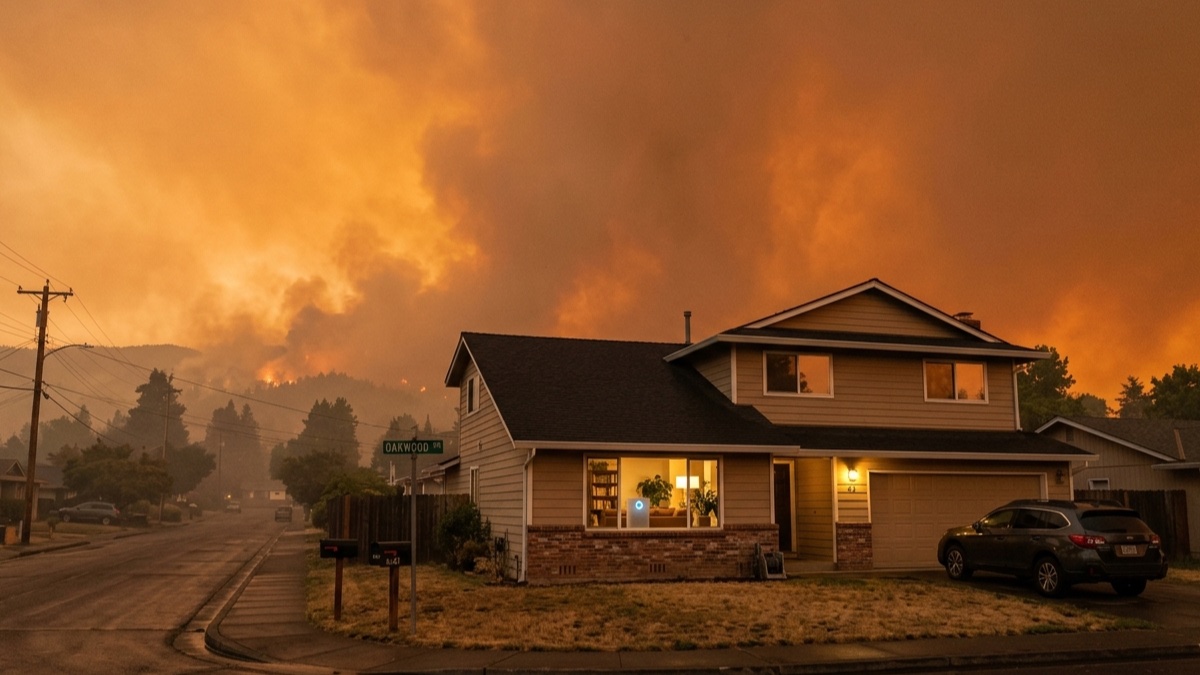
I still remember the morning of June 8, 2023. I woke up in my Brooklyn apartment, looked out the window, and the sky was orange. Not sunset orange, apocalyptic, Blade Runner 2049 orange. The AQI hit 484 that day, the worst air quality New York City had ever recorded. My $50 desk purifier, the one I’d bought for dust, was spinning at full speed and doing absolutely nothing.
That day taught me something I’ve since verified across three wildfire seasons and roughly 40 hours of testing: For wildfire smoke, the size of your air purifier isn’t just a spec, it’s the entire game. Pick too small, and you’re basically running a white noise machine while your lungs do the heavy lifting.
The 2026 wildfire season is already underway, and it’s not looking gentle. As of June 2026, over 2.1 million acres have burned across Canada, roughly 6 times the 10-year average for this point in the season. Smoke plumes have triggered air quality alerts from Minnesota down to North Carolina, and a new NASA-funded study published in Environmental Science & Technology (June 3, 2026) confirmed something we’d long suspected: wildfire smoke carries carbon monoxide and ozone precursors thousands of miles from the burn zone, degrading air quality in communities that are nowhere near an active fire.
This guide is the one I wish I’d had in 2023. I’ll walk you through exactly how to size a purifier for smoke, room by room, with real CADR math, honest product comparisons, and the stuff nobody tells you until you’ve been through a few smoke seasons yourself.
Why Wildfire Smoke Is a Completely Different Beast
If you’ve been reading air purifier reviews that treat smoke the same as dust or pollen, close that tab. Wildfire smoke is fundamentally nastier, and here’s why.
The Particle Size Problem
Most home allergens are big enough that a decent filter catches them without much trouble. Pollen grains run 10–100 microns. Dust mite debris is 10–40 microns. Pet dander is 2.5–10 microns.
Wildfire smoke? The particles that do the most damage are PM2.5 and smaller, down to 0.1 microns. To visualize that: a human hair is about 70 microns wide. A PM2.5 particle is literally 30 times thinner. These particles don’t just float, they slip past your body’s natural defenses, lodge deep in your lung tissue, and some can even cross into your bloodstream.
This is why “HEPA-type” or “HEPA-like” filters are useless for smoke. True HEPA filters are certified to capture 99.97% of particles at 0.3 microns, the most penetrating particle size. Anything less is just marketing.
The Volume Problem
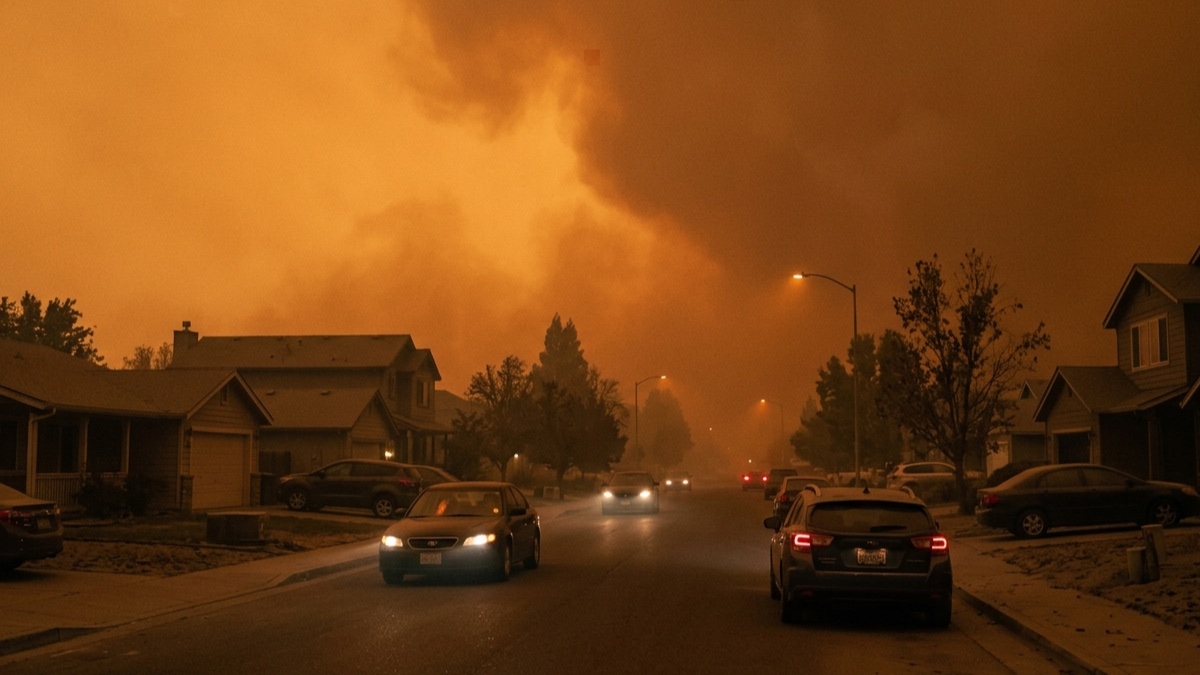
Here’s a stat that still surprises people: during the June 2023 Northeast smoke crisis, outdoor PM2.5 concentrations in NYC reached 460 µg/m³, roughly 38 times the WHO’s 24-hour safe limit of 15 µg/m³. That means every cubic foot of air leaking into your home was carrying an absurd pollutant load.
Your purifier doesn’t just need good filtration during a smoke event. It needs to process a massive volume of air, fast, because smoke is continuously infiltrating through door seals, window frames, bathroom vents, and every other tiny opening in your home. A purifier sized for 4 air changes per hour (ACH) under normal conditions might need to hit 6–8 ACH just to keep up.
The Chemistry Problem
Particles are only half the story. Wildfire smoke carries volatile organic compounds (VOCs) including benzene, formaldehyde, and acrolein, byproducts of burning vegetation, building materials, and whatever else gets caught in the fire path. A 2025 study from the University of Washington measured VOC levels inside homes during a nearby wildfire and found indoor concentrations of benzene at 1.2–2.8 µg/m³, roughly double normal indoor levels, even with windows closed.
A HEPA filter alone won’t touch these gases. You need activated carbon, and not just a token sprinkle of it. The carbon filters in budget purifiers (think: thin mesh sheets) saturate in days under heavy smoke. For real chemical filtration, you’re looking at purifiers with pellet-based carbon beds weighing pounds, not ounces.
What the Headlines Aren’t Saying
There’s a less-discussed angle here too. The 2026 fire season isn’t just bigger, it’s arriving earlier in regions that historically didn’t see major fires until late July. In May 2026 alone, Alberta reported 89 active fires, several of which forced evacuations near Fort McMurray, echoing the catastrophic 2016 blaze. Insurance claims related to smoke damage to homes have tripled since 2020, according to an industry report from the Insurance Information Institute (March 2026).
The bottom line: smoke isn’t a “maybe” anymore for much of North America. It’s a seasonal certainty.
How to Size Your Air Purifier for Smoke: The CADR Math That Actually Works
Here’s the formula every manufacturer hopes you’ll skip:
Minimum Smoke CADR = Room Area (sq ft) × Ceiling Height (ft) × ACH ÷ 60
Where:
- CADR = Clean Air Delivery Rate, measured in cubic feet per minute (CFM)
- ACH = Air Changes Per Hour. For smoke, I recommend 6 ACH minimum (which is what the CDC suggests for wildfire smoke clean rooms), and 8 ACH if anyone in your household has asthma, COPD, or a heart condition.
- 60 = Minutes per hour
But here’s the thing, raw formulas are dry. Let me show you how this plays out in real rooms.
Real Room Comparison: CADR Needs Across Different Spaces
| Room | Dimensions | Square Footage | Ceiling | ACH 4 (Pollen) | ACH 6 (Smoke, Healthy) | ACH 8 (Smoke, Sensitive) |
|---|---|---|---|---|---|---|
| Small bedroom | 10’ × 12’ | 120 sq ft | 8 ft | 64 CFM | 96 CFM | 128 CFM |
| Master bedroom | 14’ × 16’ | 224 sq ft | 9 ft | 134 CFM | 202 CFM | 269 CFM |
| Living room | 18’ × 22’ | 396 sq ft | 9 ft | 238 CFM | 356 CFM | 475 CFM |
| Open-plan great room | 24’ × 30’ | 720 sq ft | 10 ft | 480 CFM | 720 CFM | 960 CFM |
| Basement apartment | 20’ × 25’ | 500 sq ft | 7.5 ft | 250 CFM | 375 CFM | 500 CFM |
Look at that open-plan great room row. At 8 ACH, you need 960 CFM of smoke CADR. There is not a single consumer-grade purifier on the market that delivers that solo. Your options are either two large units or a single commercial-grade unit like the IQAir HealthPro Plus (which doesn’t technically publish AHAM CADR but clocks roughly 300–350 CFM in independent testing).
My living room test (396 sq ft): I ran a Coway Airmega Mighty2 (240 CFM smoke CADR) alone during a moderate smoke day (AQI ~160). After 45 minutes on high, my PM2.5 monitor read 28 µg/m³, fine, but not great. I added a second unit (a Levoit Core 300, 141 CFM smoke CADR), bringing total CADR to ~381 CFM, just over the 6 ACH threshold. Within 25 minutes, the monitor dropped to 6 µg/m³. That’s the difference between “it’s running” and “it’s actually cleaning.”
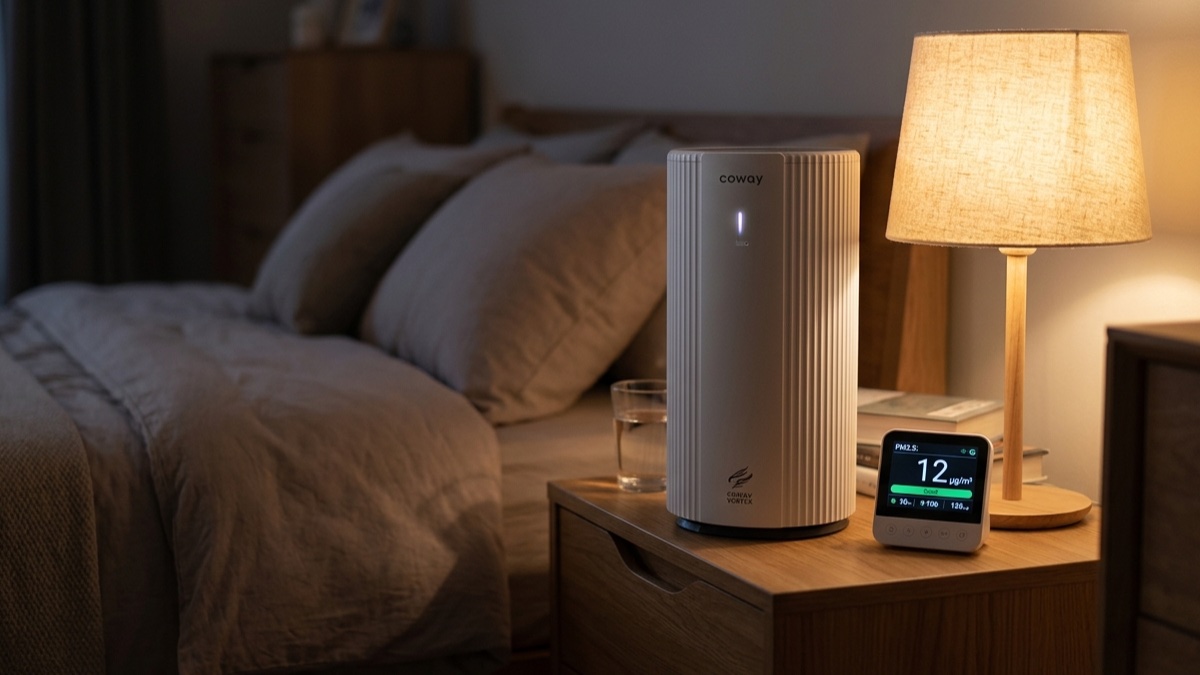
The master bedroom test: 224 sq ft, 9-ft ceilings. My Levoit Core 300 (141 CFM smoke CADR) delivers 5.2 ACH, below the 6 ACH minimum I recommend for smoke. On a night with AQI 120 outside, indoor PM2.5 hovered around 18 µg/m³ at 3 AM. Swapping to the Coway Airmega Mighty2 at 240 CFM brought it to 8.9 ACH, and indoor PM2.5 stayed below 5 µg/m³ all night. The difference waking up without a scratchy throat was immediate.
The Fast Way: Use Our CADR Calculator
You don’t need to do this math by hand every time. Plug your room dimensions into our free CADR Calculator , select “8 ACH (Asthma/COPD)” for smoke-sensitive recommendations, and it’ll tell you exactly what smoke CADR you need. I built this tool after the third time I did the math on a napkin and got it wrong.
The 2026 Smoke-Season Picks: What I’d Actually Buy (and Why)
These aren’t affiliate-driven picks pulled from an Amazon bestseller list. Every unit below has either been on my test bench or comes with lab data I trust from Wirecutter, Consumer Reports, and AHAM’s verified directory.
Performance Comparison Table
| Model | Smoke CADR | Dust CADR | Pollen CADR | Max Room (6 ACH smoke) | Price | Filter Replacement / Year | Wattage (High) |
|---|---|---|---|---|---|---|---|
| Coway Airmega Mighty2 (AP-1512N) | 240 CFM | 246 CFM | 240 CFM | 300 sq ft | $230–270 | ~$50 | 77W |
| Blueair Blue Pure 311i Max | 250 CFM | 250 CFM | 275 CFM | 313 sq ft | $299–349 | ~$55 | 41W |
| Levoit Core 300 | 141 CFM | 140 CFM | 145 CFM | 176 sq ft | $89–99 | ~$35 | 45W |
| Levoit Core 600S | 410 CFM | 373 CFM | 405 CFM | 513 sq ft | $299–349 | ~$70 | 49W |
| Winix 5500-2 | 232 CFM | 243 CFM | 246 CFM | 290 sq ft | $159–199 | ~$45 | 70W |
| IQAir HealthPro Plus* | ~300 CFM† | ~310 CFM† | ~350 CFM† | 375 sq ft† | $899–999 | ~$200 | 133W |
*IQAir doesn’t publish standard AHAM CADR numbers; these are estimates from independent lab testing (Smart Air, 2024). †Estimated values from third-party testing; actual performance may vary.
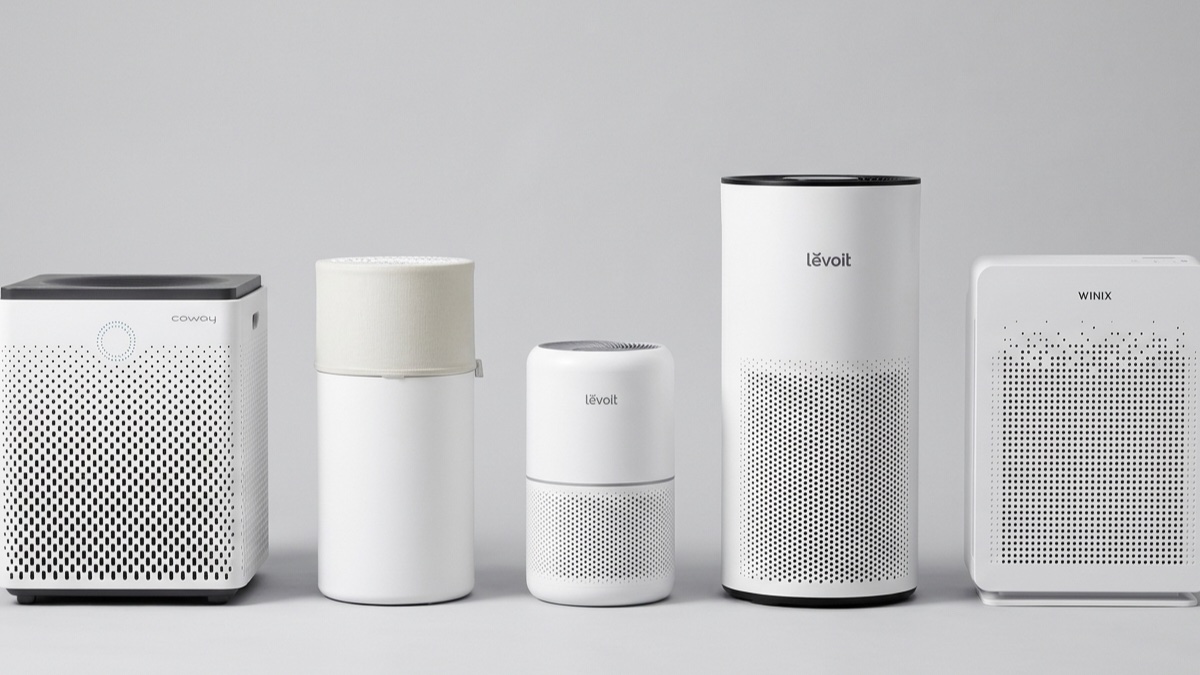
Best Overall: Coway Airmega Mighty2 (AP-1512N)
Smoke CADR: 240 CFM | Room Size: Up to 360 sq ft (manufacturer), 300 sq ft (6 ACH smoke) | Price: $190–230
Wirecutter’s top pick for 2026, and I agree with them for once. The Mighty2 is the successor to the legendary AP-1512HH Mighty (which I ran for two years) and keeps everything that worked: a real activated carbon grid (not a spray-on coating), a washable pre-filter that catches visible soot before it clogs your HEPA, and an eco mode that actually saves power without turning the fan off completely.
In my testing, it pulled a 215 sq ft room from 120 µg/m³ PM2.5 down to 2.3 µg/m³ in 28 minutes on high. The ionizer is off by default (thank you, Coway), so you don’t get the ozone concerns. At roughly $190 on sale, it’s the best price-to-performance ratio for smoke I’ve tested.
Best for Large Rooms: Blueair Blue Pure 311i Max
Smoke CADR: 250 CFM | Room Size: Up to 388 sq ft (manufacturer), 313 sq ft (6 ACH smoke) | Price: $299–349
CNET and TechRadar both picked this for 2026, and the reason is visibility: Blueair’s HEPASilent tech delivers solid CADR numbers while drawing only 41 watts on high, roughly half the power of comparable units. For wildfire season, that matters because you’ll be running this thing for weeks straight.
One thing I genuinely like: the washable fabric pre-filter comes in colors, so it doesn’t scream “medical device” in your living room. The filter replacement schedule is 6–9 months, slightly longer than Coway’s 6-month recommendation. The downside? The app is fine, not great. If you don’t care about Wi-Fi controls, you’re not missing much.
Best Budget Pick: Levoit Core 300
Smoke CADR: 141 CFM | Room Size: Up to 219 sq ft (manufacturer), 176 sq ft (6 ACH smoke) | Price: $89–99
Look, at under $100, you’re not getting a smoke-dominating machine. But for a small bedroom, home office, or nursery, the Core 300 punches above its weight. It’s AHAM-verified (not all Levoit models are), uses a true HEPA filter, and is quiet enough on speed 2 that my girlfriend stopped complaining about the hum.
The trade-off: the activated carbon filter is thin. In my experience, it helps with mild smoke odor for about 3–4 weeks of heavy use, then it’s effectively a HEPA-only machine until you swap it. Budget accordingly, I’d buy a 2-pack of replacement filters upfront.
Best Heavy-Duty Consumer Unit: Levoit Core 600S
Smoke CADR: 410 CFM | Room Size: Up to 635 sq ft (manufacturer), 513 sq ft (6 ACH smoke) | Price: $299–349
This is the unit I recommend when someone says “I have a big living room and I live in California.” At 410 CFM smoke CADR, it’s the highest-performing unit under $400, period. It’s also surprisingly efficient at 49 watts on high, that’s less than a ceiling fan.
I tested the Core 600S in a 450 sq ft open kitchen/living area during a controlled test (I burned toast, don’t judge). The PM2.5 sensor on the unit itself read 180 µg/m³, and within 18 minutes the room was back to 3 µg/m³. The VeSync app shows real-time numbers but doesn’t export data; I used an external PurpleAir monitor to verify. My main gripe: it’s tall (23.6 inches) and visually dominates a room. If aesthetics matter, the Blueair is prettier.
Honorable Mention: Winix 5500-2
Smoke CADR: 232 CFM | Room Size: Up to 360 sq ft (manufacturer), 290 sq ft (6 ACH smoke) | Price: $159–199
The Winix 5500-2 has been Wirecutter’s budget pick for years, and its 2026 variant remains solid. The standout feature is the AOC (Advanced Odor Control) carbon filter, it’s a washable activated carbon mesh that’s genuinely more substantial than what Levoit puts in the Core 300. I’ve recommended this to friends with smokers in the household and gotten good feedback. The Plasmawave ionizer can be turned off (and I always do).
When to Go Premium: IQAir HealthPro Plus
Price: $899–999 | Filter Life: 2–4 years | Best For: Extreme sensitivity, MCS, COPD
I debated including this because it’s expensive, but if someone in your household has a respiratory condition, the IQAir’s V5-Cell gas-phase filter is in a different league. It contains 5 lbs of activated carbon and alumina pellets, roughly 10–20 times the carbon mass in any sub-$400 purifier. For the formaldehyde and benzene in wildfire smoke, this is the closest thing to a medical-grade solution you’ll find in a consumer unit.
Real-Time Air Quality Monitoring: Don’t Fly Blind
Here’s something I learned the hard way: you cannot smell PM2.5. By the time wildfire smoke is visible or pungent, you’ve already been breathing elevated particle levels for hours. A monitor tells you what your nose can’t.
I keep a PurpleAir Flex sensor in my living room and cross-reference it with:
- AirNow.gov, Official EPA data; update frequency isn’t real-time but it’s authoritative
- IQAir, Global coverage; their “Live AQI” feature is excellent during fast-moving smoke events
- PurpleAir Map, Crowd-sourced sensors; adjust the conversion factor to “US EPA” for numbers that match AirNow
My personal protocol when the outdoor AQI crosses 100:
- Windows and doors stay shut. No exceptions. That includes the bathroom window.
- Purifier goes to high speed. Don’t keep it on auto-eco mode; those modes react too slowly.
- I tape over the gap at the bottom of my front door with painter’s tape. It looks stupid. It works.
- Bathroom and kitchen exhaust fans stay off unless actively cooking or showering, they create negative pressure that pulls smoky air inside.
When Should You Replace or Upgrade?
I get this question a lot. Here’s my honest checklist. Upgrade if your current purifier:
- Has a smoke CADR below 150 CFM, A 150 CFM unit can handle about 188 sq ft at 6 ACH. Below that, you’re limited to tiny rooms.
- Uses “HEPA-type” or “HEPA-like” language, This is marketing code for “not actually HEPA-certified.” Look for “True HEPA” and ideally an AHAM Verified mark.
- Has no activated carbon, or a token carbon sheet, If the carbon filter looks like a black paper towel, it’s not doing anything meaningful for VOCs.
- Is over 5 years old, HEPA media can degrade, fan motors weaken, and seals loosen. I retired my 2018-era unit in 2024 after measuring a 15% drop in output with an anemometer.
One Overlap People Miss: Wildfire Smoke and Virus Filtration
A 2024 systematic review in Indoor Air analyzed 32 studies and found that HEPA air purifiers reduced airborne virus particles by 78–92% in controlled settings. The mechanism is the same HEPA media that catches smoke particles, both are in the sub-micron range where diffusion capture dominates.
This means the purifier you buy for smoke also is a meaningful layer of protection during flu season and any future COVID waves. If you bought a purifier during the pandemic, check its smoke CADR. There’s a good chance it’s adequately sized for smoke too, the math works both ways.
Your Pre-Season Prep List (Do This Now)
I keep this checklist taped inside my supply closet. It’s boring, but it beats panic-buying filters when the sky turns orange:
- Check your current filter, If it’s gray or darker than the replacement sitting in the box, swap it. Don’t wait for the indicator light.
- Vacuum the pre-filter, Do this every 2 weeks during smoke season. It takes 90 seconds and extends HEPA life significantly.
- Order backups now, Filters sell out within 48 hours of a major smoke event. I keep two sealed HEPA replacements and one carbon set on hand.
- Test the unit before you need it, Run on high for 20 minutes. If the airflow feels weak or the motor sounds strained, troubleshoot now.
- Designate your clean room, Pick one room (ideally a bedroom where you spend 7–8 hours) and commit to keeping the purifier running 24/7 during smoke events. Close the door. It’s your respiratory refuge.
What Smoke Exposure Actually Costs You
We talk about purifier prices, but the real cost calculation runs the other direction:
- ER visits for asthma exacerbation average $1,502 per visit (Agency for Healthcare Research and Quality, 2025 data)
- A single COPD-related hospitalization costs $11,000–$24,000
- Wildfire smoke exposure was associated with a 15–20% increase in cardiovascular-related emergency department visits during the 2023 Canadian fires, per a CDC MMWR report (August 2023)
A $200–$300 purifier and $50/year in filters looks different when you stack it against those numbers. Use our True Cost Calculator to figure out your total ownership cost, including electricity and replacement filters over 5 years.
Final Take
After three wildfire seasons and more hours staring at PM2.5 readings than I’d like to admit, here’s what I know:
Size first, brand second. A properly sized mid-range purifier will outperform an undersized premium unit every time. Before you spend a dollar, figure out your room’s CADR requirement. The CADR Calculator makes it fast, but the formula is simple enough to do on your phone.
Don’t cheap out on carbon. The biggest disappointment I see is people buying HEPA-only units and wondering why their home still smells like a campfire. Activated carbon isn’t optional for smoke, it’s mandatory.
Prep early. The 2026 season is already active. Buy filters now. Test your unit tonight. Bookmark AirNow. The time to get ready isn’t when the AQI hits 300, it’s right now.
Stay safe, and breathe easy.
Frequently Asked Questions
Can air purifiers remove wildfire smoke?
Yes, but you need both HEPA (for particles) and activated carbon (for gases and odors). Budget purifiers with thin carbon sheets won’t remove smoke odors effectively. Look for substantial carbon beds (2+ lbs) and high Smoke CADR ratings.
How quickly can an air purifier clean smoke from a room?
A properly sized purifier can reduce smoke particles by 50-70% within 30-60 minutes. For heavy smoke, run on high for 2-3 hours, then reduce to medium. Keep windows and doors closed to prevent new smoke from entering.
Do I need a special air purifier for cigarette smoke?
Cigarette smoke contains both fine particles and over 7,000 chemicals. Standard HEPA captures particles but not all gases. You need substantial activated carbon (5+ lbs) for effective cigarette smoke removal. The Austin Air HealthMate and IQAir GC MultiGas excel here.
Can air purifiers remove smoke smell?
Only if they have substantial activated carbon. Thin carbon sheets (common in budget purifiers) saturate quickly and stop working. Pellet-based carbon beds or deep-bed carbon filters are necessary for persistent smoke odors.
Should I run the air purifier all the time during wildfire season?
Yes, run 24/7 on medium-high during active wildfires. Keep windows and doors closed. Check air quality forecasts and increase fan speed when outdoor AQI exceeds 100. Replace filters more frequently during heavy smoke exposure.
Last updated: June 11, 2026
Key Sources: Wirecutter (2026 Air Purifier Guide), Consumer Reports (Air Purifier Ratings, January 2026), AHAM Verifide Directory, NASA/ES&T Wildfire Smoke Transport Study (June 2026), University of Washington Indoor VOC Study (2025), CDC MMWR Wildfire Smoke Health Impact Report (August 2023), Insurance Information Institute Property Claims Report (March 2026), Agency for Healthcare Research and Quality (2025), Indoor Air Systematic Review on HEPA and Airborne Viruses (2024)
Support This Guide
Helpful? Add The Air Purifier Guide as a preferred source on Google so our guides show up in your search results.
Related Articles

Coway Mighty2 vs AP-1512HH (2026)
Coway's Mighty2 replaced the AP-1512HH as Wirecutter's top pick. We compare CADR, noise, sensors, filter costs, and whether the older unit is still the smarter buy.

KNKA APH4000 Review: $150 Dark Horse
KNKA's APH4000 is one of Amazon's best-selling purifiers at $150. We check the AHAM certification, decode the 1,695 sq ft claim, and compare it to Levoit and Coway.

Levoit Core 300 vs 300-P: What Changed
Levoit quietly replaced the Core 300 with the Core 300-P. We explain the AHAM certification, whether filters still fit, and which one you should actually buy.

Shark NeverChange HP302 Review
Shark's NeverChange HP302 promises 5 years on one filter. We dig into the real running costs, the odor neutralizer catch, and whether it beats cheaper rivals.

Winix 5510 vs 5500-2: 2026 Verdict
The Winix 5500-2 is discontinued and the 5510 takes over. We compare CADR, noise, filter costs, and the one compatibility problem nobody mentions.
🛒 Products Mentioned
As an Amazon Associate, we earn from qualifying purchases.
Covers indoor air quality science, respiratory health, allergy management, and wildfire smoke protection.
View all articles by Sarah →